

 Aquifer Conditions


2.5
millionTexans served across eight Texas counties
90,000
gallons of rainwater collected at EAA headquarters in 2024
1,940
permit holders help us manage this vital resource
10,000
students have enjoyed free field trips to the EAA EOC
2,000
native plants given free to residents in Oct 2024

The Edwards Aquifer is more than a water source — it’s a living story that connects our past, present and future. It’s the reason settlers came to this area, and it’s the lifeblood of our growth. Our aquifer is a resource we can study and learn from. It’s an incredible wonder, and it’s why we’re here.
Dive into deeper discovery through education.
There’s so much to explore at the EAA Education Outreach Center. We’ve got a hub of interactive exhibits and hands-on activities designed to inspire a deeper connection to the water that sustains our region.

Tap into the latest
research here at the EAA
The Edwards Aquifer Authority’s Environmental Data Portal is your gateway to today’s research, insights, and discoveries driving sustainability and innovation for the region.

Stay Connected to Us





This #WorldEnvironmentDay, let’s answer with conservation. Every action to conserve water creates a ripple effect — helping protect the Edwards Aquifer System, the Comal and San Marcos springs, and the species that depend on them. 🌎
#30YearsOfRippleEffects #EdwardsAquifer
Our Water Matters: A ‘natural observatory’ for Edwards Aquifer research
“What we are trying to find out is where is that water going and what is it doing after it infiltrates,” he explains, because the movement of water within the soil is critical to understanding groundwater ...recharge…”
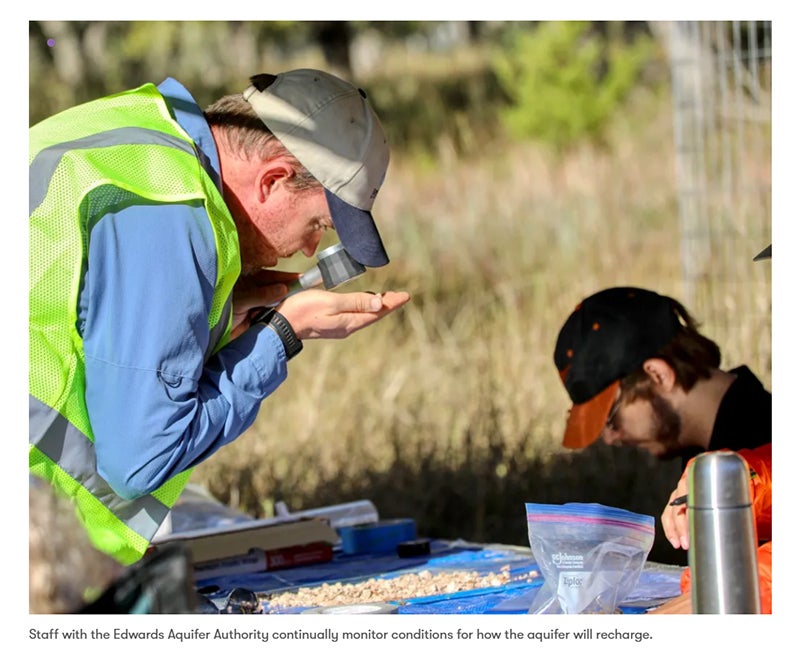
Read the full story in the Big Bend Sentinel where Trey Gerfers, author of the Our Water Matter column and General Manager for the Presidio County Underground Water Conservation District, met with Mark Hamilton, EAA Executive Director of Aquifer Management Services and Thomas Marsalia, EAA Associate Director of Aquifer Sustainability, to learn more about the research efforts out at our EAA Field Research Park.
The Big Bend Sentinel is a news publication that covers the people and the culture of our Far-West-Texas region.

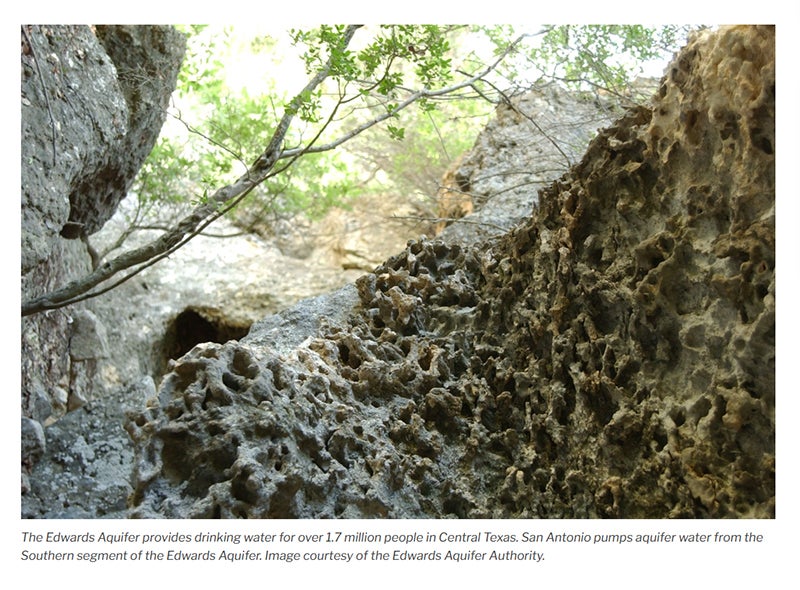
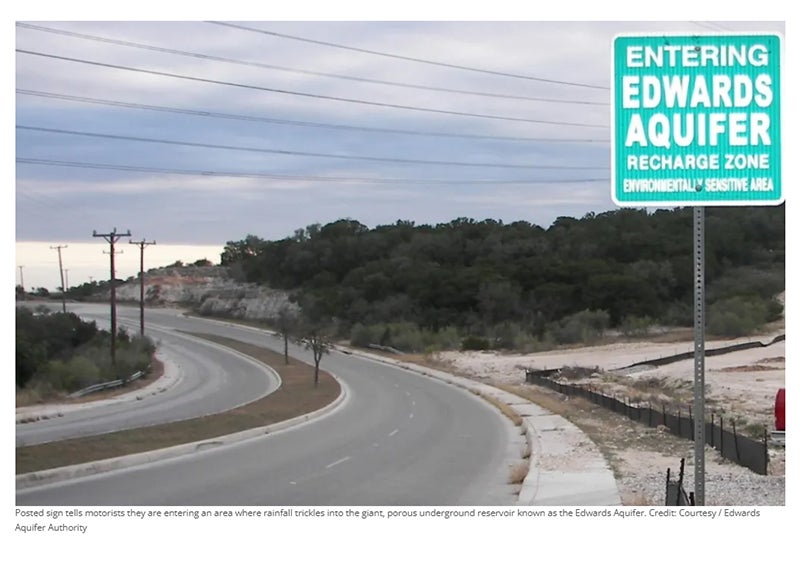
Covering an area approximately 180 miles long and up to 40 miles wide in Central Texas, the Edwards Aquifer “is one of the most prolific karst...
bigbendsentinel.com1 acre-foot of water is about the same height as Wemby making a three-pointer on the court?!
Here's how we breakdown that math:
🏀an NBA court is 4,700 square feet
💧1 acre-foot of water is 325,851 gallons of water
➡️Therefore, if the court transformed into a ...pool, the water would reach to about the height of Wemby holding a basketball above his head (making a three-pointer...swish!). Which is about 43,560 cubic feet of water at 9.26 feet in depth!
Go Spurs Go!🏀
#GoSpursGo #sanantoniospurs #Spurs #NBAFinals #NBAFinals2026 #victorwembanyama #wemby
Go Spurs Go!
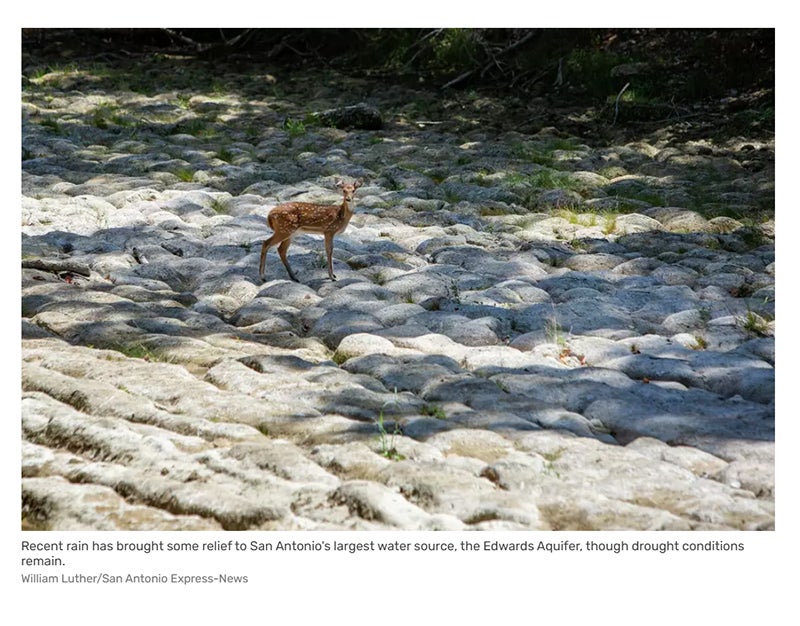
Aquifer conditions have improved ✅💧
The San Antonio Spurs are playing tonight 🏀🤠
Karston & friends are cheering them on! 💙
💧 For nearly 30 years, the Edwards Aquifer Authority has worked to protect one of Texas’ most important natural resources - the Edwards Aquifer. This year, we celebrate the Ripple Effects of stewardship, science, conservation, and community.
Join us as we look back at where it all ...began — and forward to the future of the Edwards Aquifer for South-Central Texas.
Learn more at https://www.edwardsaquifer.org/eaa-30th-anniversary-home-page/#timeline
#30YearsOfRippleEffects #EdwardsAquifer


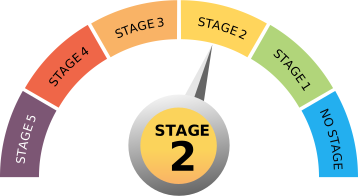
Aquifer Conditions Improve: EAA Lifts Stage 3 and Returns to Stage 2 Permit Reductions for the San Antonio Pool
San Antonio, TX – The Edwards Aquifer Authority (EAA) declared the lifting of Stage 3 with a return to Stage 2 Critical Period Management for Edwards groundwater permit holders... in the San Antonio Pool of the EAA’s jurisdiction (Medina, Bexar, and parts of Atascosa, Caldwell, Guadalupe, Comal, and Hays counties) based on improved aquifer conditions effective Saturday, May 30, 2026. On Saturday, the ten-day averages were as follows: J-17 index well was 640.2 feet above mean sea level (ft. amsl), Comal Springs was 159 cubic feet per second (cfs), which resulted in these indicators being above the threshold for Stage 3 of the EAA Critical Period Management Plan (CPM). Additionally, the ten-day average at San Marcos Springs was 87 cfs. The San Antonio Pool had been in Stage 3 since April 29, 2026.
CPM Stage 2 for the San Antonio Pool reduces the annual authorized withdrawal amounts available to affected Edwards groundwater permit holders by 30 percent of their withdrawal amounts based on the number of days CPM is in effect for the indicated stage reduction. These reductions apply to all Edwards Aquifer groundwater permit holders authorized to pump more than three acre-feet annually. This includes industrial and agricultural users, as well as water utilities authorized to pump water from the Edwards Aquifer for delivery to their respective customers. All affected permit holders must also report their pumping totals to the EAA on a monthly basis.
Residents and businesses within those counties who receive their water from a public water system should follow their respective water providers’ directives regarding water use practices. It should be noted that the EAA does not enforce lawn watering activities or other general water limitations beyond the curtailment of withdrawals from the Edwards Aquifer. Any enforcement of such activities or limitations is enforced by a municipality. The EAA does not regulate the general public but instead regulates Edwards well owners with withdrawal permits authorizing their right to pump from the aquifer.
The EAA is a groundwater conservation district that manages, enhances and protects the Edwards Aquifer, a major groundwater system serving approximately two-and-one-half million South Central Texans. The EAA jurisdiction spans across 8 counties including Uvalde, Medina, Bexar, and parts of Atascosa, Caldwell, Guadalupe, Comal and Hays counties.


 CURRENT