

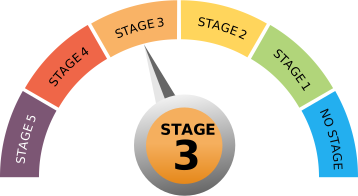
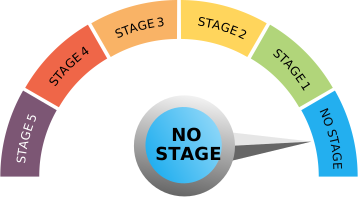
 Aquifer Conditions


2.5
millionTexans served across eight Texas counties
90,000
gallons of rainwater collected at EAA headquarters in 2024
1,940
permit holders help us manage this vital resource
10,000
students have enjoyed free field trips to the EAA EOC
2,000
native plants given free to residents in Oct 2024

The Edwards Aquifer is more than a water source — it’s a living story that connects our past, present and future. It’s the reason settlers came to this area, and it’s the lifeblood of our growth. Our aquifer is a resource we can study and learn from. It’s an incredible wonder, and it’s why we’re here.
Dive into deeper discovery through education.
There’s so much to explore at the EAA Education Outreach Center. We’ve got a hub of interactive exhibits and hands-on activities designed to inspire a deeper connection to the water that sustains our region.

Tap into the latest
research here at the EAA
The Edwards Aquifer Authority’s Environmental Data Portal is your gateway to today’s research, insights, and discoveries driving sustainability and innovation for the region.

Stay Connected to Us




🏡💧 Conservation can begin in your own backyard.
This weekend, choose one action:
🌿 Research a native plant for your ecoregion.
🍂 Add mulch to help soil retain moisture.
🚿 Check your irrigation system for leaks.
🌧️ Redirect runoff toward planted ...areas when appropriate.
📸 Share a water-wise feature from your landscape.
Small changes can conserve water, support wildlife, and strengthen the future of the Edwards Aquifer.
#TexasNativePlantWeek #BackyardStewardship #EveryDropCounts #WaterWise
🌿 What’s your native plant personality?
💜 Gregg’s mistflower: welcoming and wildlife-friendly
❤️ Turk’s cap: adaptable and unmistakably Texan
🌾 Little bluestem: resilient and dependable
🌼 Purple coneflower: colorful and community-minded
Whatever ...your style, there’s a native plant suited to your landscape’s sunlight, soil, and space.
Which one are you? Tell us below!
#TexasNativePlantWeek #NativePlantPersonality #WaterConservation #EdwardsAquifer
🌱 It's Texas Native Plant Week!
Native plants are adapted to local soils and climate, so they generally require less water after becoming established. Their deeper roots can improve soil quality, reduce erosion, and help more rainwater soak into the ground.
Choosing native... plants connects our landscapes to responsible water use and turns our own backyards into places of stewardship.
#TexasNativePlantWeek #NativePlants #WaterWiseLandscaping #EdwardsAquifer #Stewardship
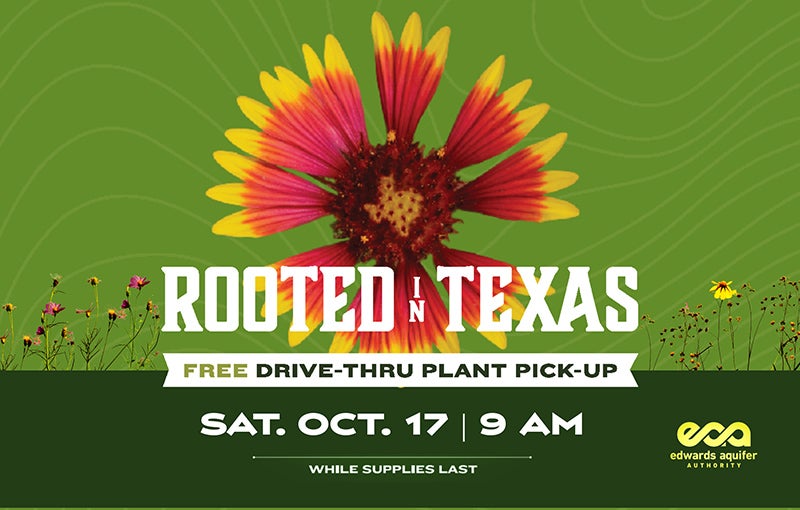
🌿 Free Native Plant Giveaway Tomorrow!
Join the EAA for Rooted in Texas FREE Drive-Thru Plant Pick-Up in New Braunfels,TX and take home 2 native plants while supplies last.
Native plants can help:
💧 Conserve water
🌱 Improve soil health
🐾 Support local ...wildlife
🌧️ Increase water infiltration and reduce runoff
📅 Saturday, October 17
🕘 Beginning at 9 AM
📍 Columbus Club Hall, 111 Landa Street, New Braunfels, TX
Each guest in a vehicle will receive a random combination of 1 sun plant and 1 shade plant. (Plant offerings are subject to change.)
One native plant can begin a lasting ripple effect in your own backyard.
#RootedInTexas #NativePlants #WaterConservation #EdwardsAquifer #MakeYourRipple
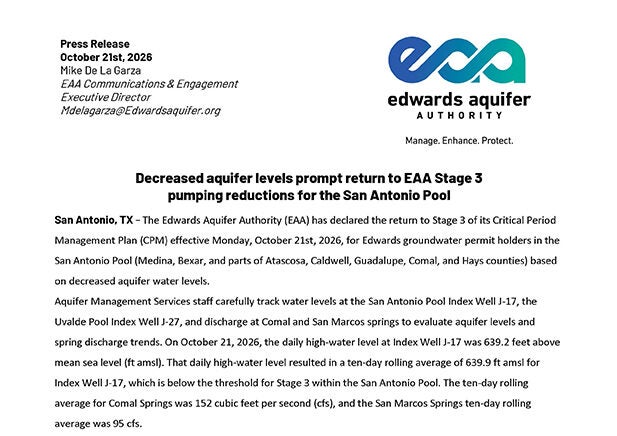
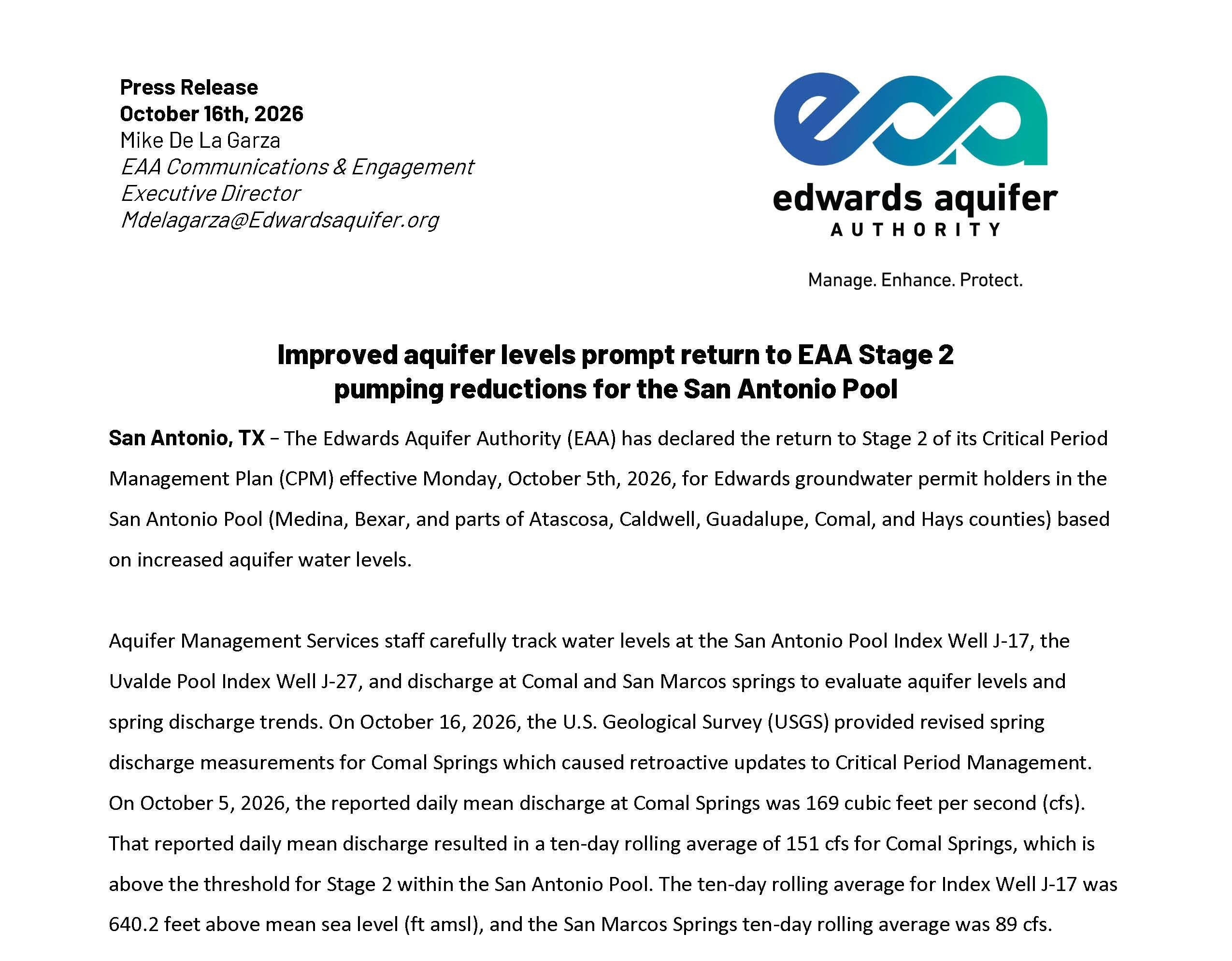
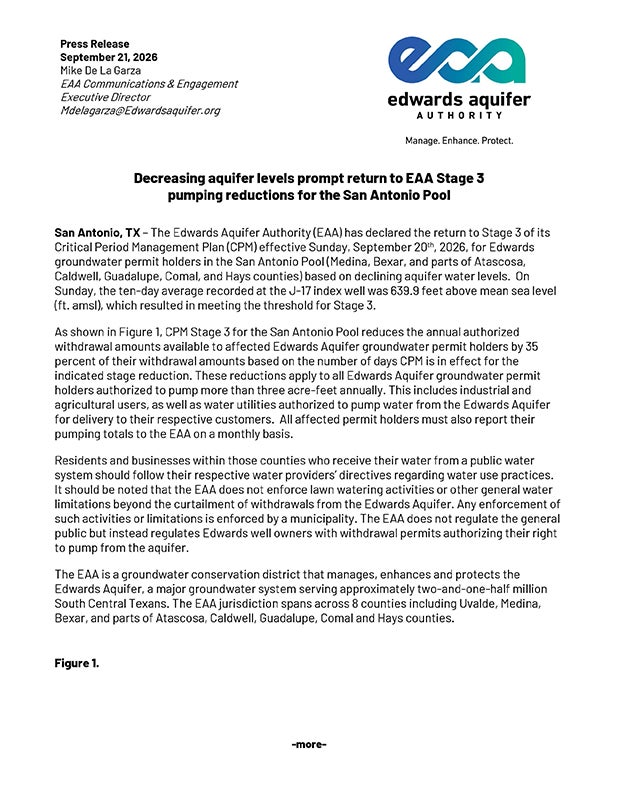
The Edwards Aquifer Authority is confirming that the San Antonio Pool of the Edwards Aquifer has achieved Stage 2 status. The status is retroactive to October 5th, 2026. Further information will be released and posted later today.
🦋 Tiny wings. Incredible journeys.
As temperatures slowly cool across South Central Texas, monarch butterflies are making their incredible journey through our state, traveling thousands of miles from Canada to their winter home in central Mexico! 🍂
But these beautiful ...pollinators need our help. Monarch populations have declined dramatically over the past few decades, largely due to habitat loss and declining milkweed availability.
🌿 You can make a difference! Plant native milkweed and nectar-rich flowers, avoid pesticides, and create welcoming spaces for monarchs to rest and refuel along their journey.
Small actions can make a big ripple effect for wildlife and the ecosystems we share. 💧🦋
#MonarchMigration #EdwardsAquifer #NativePlants #PollinatorConservation #MakeYourRipple #TexasWildlife
🌎🔬 Earth Science Week is here!
The study of Earth Science helps us understand the connections among rocks, minerals, groundwater, landscapes, and the communities that depend on natural resources.
At the EAA, geoscience, monitoring, mapping, and field research help guide ...science-based decisions for the Edwards Aquifer.
This week, we’re celebrating the professionals and discoveries helping us understand and protect the world beneath our feet.
#EarthScienceWeek #EdwardsAquifer #Geoscience #ScienceBased #Groundwater
🍂 Sweater weather is on the way, just in time for some fall planting! 🌱☀️
Hear from our friend Roxy Van Ruiten, KENS 5 & Kens5.com meteorologist, reporting for our EAA Education Outreach Center as she shares the 7-day weather forecast!
And speaking of beautiful fall ...weather, it's the perfect time to join us for our Rooted in Texas | FREE Drive-Thru Plant Pick-Up in New Braunfels, TX this Saturday, October 17, from 9 AM–Noon 🌼
Two FREE Texas native plants per person, while supplies last!
🌱 Event details: https://www.edwardsaquifer.org/events_list/rooted-in-texas-a-free-drive-thru-plant-pick-up-event-hosted-by-the-eaa-2026/
#EdwardsAquiferAuthority #KEN5 #RootedInTexas #texasnativeplants #newbraunfels #freeplants


 CURRENT