
 Aquifer Conditions
Science & Data Document Library
Science and Data Resources
Executive Summary of Water Availability Study for the Guadalupe and San Antonio River Basins

Description: Note: This paper is included for its historical value but has been replaced by more recent studies. Summary of studies on proposed reservoirs on the Guadalupe and San Antonio Rivers.
Location: Guadalupe River Basin, San Antonio River Basin
Summary:Note: This report is included because of its historical value. It has been replaced by more recent plans.
Environmental analyses indicate no fatal flaws nor significant permitting problems at any of the potential reservoir sites studied. Mitigation of impacts will be required at any of the sites, which can be provided at least, in part, by peripheral land usage around the proposed reservoirs. No threatened-or endangered vegetative, wildlife, or aquatic species are known to occur in any of the potential reservoir sites.
HYDROLOGY
Hydrologic evaluations indicate that substantial firm yields can be developed from the potential reservoir sites. Existing water rights play an extremely important role in the future availability of water for development. Existing gaged fiows do not yet refiect the full development of the existing water rights. Thus, even without additional reservoir projects, it can be expected that future flows within the rivers would decline as these water rights are developed.
Return flows by municipalities can play a dramatic role in the yield of any of the proposed reservoirs. The Goliad Reservoir benefits directly by having a dramatic increase in firm yield on virtually a one to one ratio for each gallon of water returned to the river by San Antonio. Less dramatic but equally important, return flows from San Antonio impact the ability of water-right holders below the confluence of the San Antonio and Guadalupe rivers to obtain their water rights.
Return flows also impact the ability to meet the demands of the bays and estuaries, which have been defined in these studies. Future policy decisions by the City of San Antonio regarding these return flows will have a dramatic impact on decision-making regarding reservoir development.
Reductions in springflows from the Comal and San Marcos springs would have a severe impact on the ability of existing water-right holders to obtain flows which they have historically used, and would also have a severe impact upon the flows into the bays and estuaries. Likewise, the yields of Canyon Reservoir and any proposed reservoir projects would be significantly reduced by this reduction in flow, should springflows continue to diminish. Future policy decisions by the City of San Antonio and others regarding withdrawals from the Edwards Aquifer will therefore significantly impact the development of future reservoir projects.
Freshwater inflow requirements to the bays and estuaries required to maintain viable biological habitat have, for the first time, been applied to reservoir firm-yield calculations. Bay and estuary flow requirements to maintain a viable habitat can be met, and will be exceeded in most years due to uncontrolled drainage areas and flood spills. Even providing for these bay and estuary requirements, significant yields can be developed from any of the potential reservoir sites.
Comprehensive and Critical Period Monitoring Program to Evaluate the Effects of Variable Flow on Biological Resources in the San Marcos Springs/River Aquatic Ecosystem Final 2003 Annual Report
Description: Annual report for 2003 on biota study of San Marcos Springs/River
Location: San Marcos Springs/River
Summary:The purpose of this report is to document the results of all aquatic ecosystem monitoring conducted in 2003 at San Marcos Springs located in San Marcos, Texas. The monitoring and report preparation was performed by BIO-WEST, Inc. Pflugerville, Texas.
[Excerpted from Executive Summary]
This annual summary report presents a synopsis of methodology used and an account of sampling activities including sampling conditions, locations, and raw data obtained during three quarterly sampling events (Comprehensive Monitoring Effort) conducted on the San Marcos Springs/River ecosystem in 2003. There were no low-flow critical periods or high-flow events triggered in 2003. [D]ischarge steadily declined through 2003 (the lowest flow occurred on the final day of the year) and dropped to slightly below the historical average for the month of December.
Baseline data have continued to show that the San Marcos River is an ecosystem with high water quality according to the chemical and physical variables that were measured. Aquatic vegetation remained abundant throughout the study period and provided suitable habitat for biological communities.
As occurred in 2002, there was a substantial increase in total coverage of Texas wild-rice throughout the San Marcos River in 2003 relative to the previous sample. The scouring events in 2001 and 2002 have had a positive long-term impact on Texas wild-rice total coverage These scouring events appear to stimulate growth of individual stands and also result in displacement of small Texas wild-rice plants, which settle into new areas and grow rapidly. Stands of Texas wild-rice that remain in place after flooding are generally smaller, but they experience rapid growth.
Fountain darters were collected from each sample reach during each sampling event in 2003. The suitability of various vegetation types in the San Marcos River as habitat for fountain darters are similar. The size-class distribution for fountain darters collected by drop nets from the San Marcos Springs/River ecosystem in 2003 is typical of a healthy fish assemblage. However, the distribution is shifted towards larger fish than those observed in the Comal Springs/River ecosystem and this may be a function of lower quality habitat in the two sampled reaches compared with the Comal River reaches. Also, currents tend to be stronger in the San Marcos River reaches and may contribute to finding larger, but fewer, fish. In general, the number of fountain darters per net in the San Marcos River was much lower than in the Comal River. There also appears to be a seasonal trend in fountain darters collected in the San Marcos River of low abundance in the fall and winter with increasing abundance in the spring and into summer.
No giant ramshorn snails (Marisa cornuarietis) were observed in the San Marcos River in 2002 or 2003. However, because of the potential for a rapid population increase and the impact that this exotic species can have under heavier densities, close monitoring should continue. The gill parasite that has been reported to infect the fountain darter in the Comal system was not visually evident in fountain darters collected from the San Marcos system in 2003.
Estimated population densities of the San Marcos salamander in 2003 were consistent with observations in 2001-2002. [T]he sample site adjacent to the former Aquarena Springs Hotel consistently had the highest number of San Marcos salamanders. Population estimates have varied greatly between seasons at each site, overshadowing any seasonal or discharge-related trend that may be present. A lack of substantial lowflow data precludes discussion of potential influences of lower flows on the population at this time.
This study remains the most comprehensive biological evaluation that has ever been conducted on the San Marcos system.
Comprehensive and Critical Period Monitoring Program to Evaluate the Effects of Variable Flow on Biological Resources in the San Marcos Springs/River Aquatic Ecosystem Final 2010 Annual Report
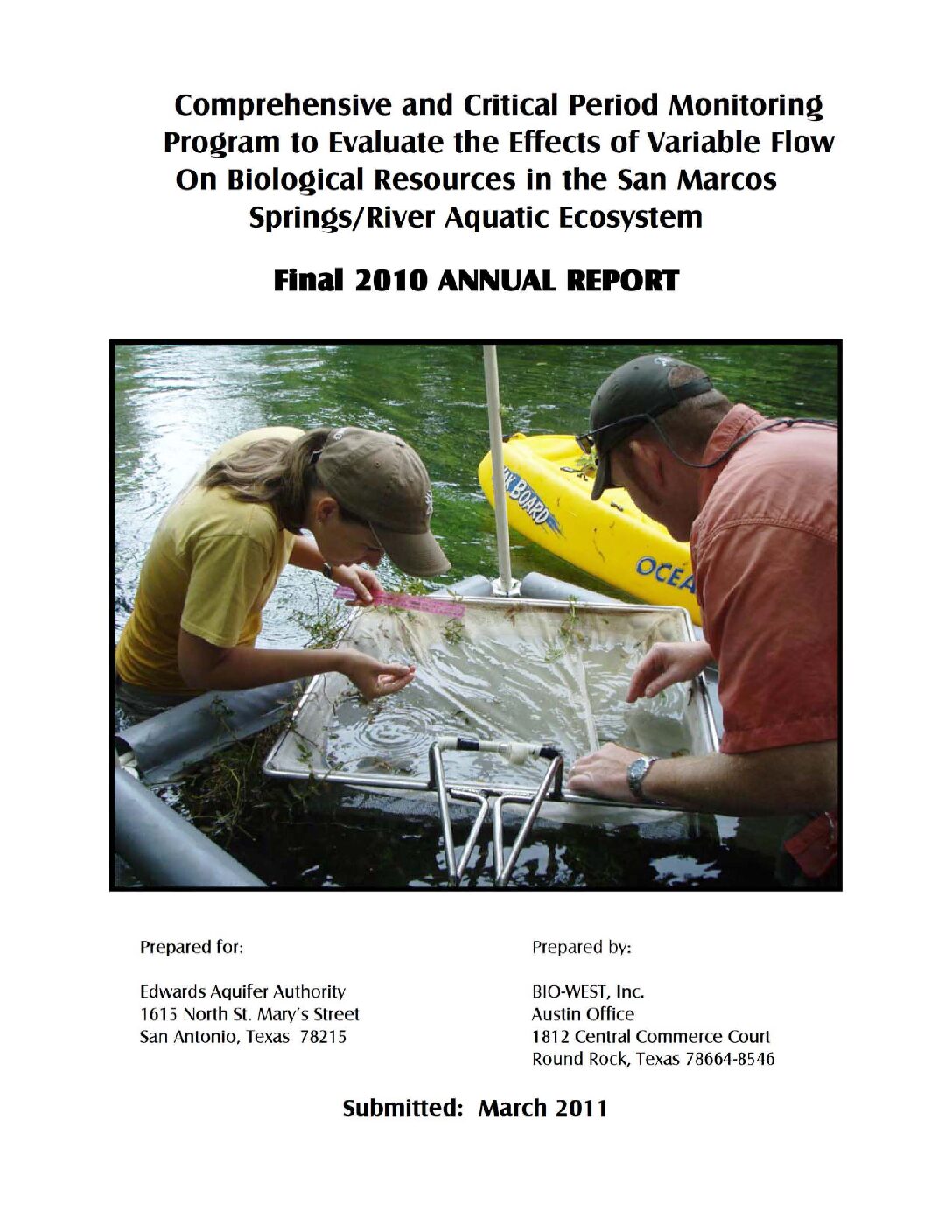
Description: Annual report for 2010 on biota study of San Marcos Springs/River
Location: San Marcos Springs/River
Summary:The purpose of this report is to document the results of all aquatic ecosystem monitoring conducted in 2010 at San Marcos Springs located in San Marcos, Texas. The monitoring and report preparation was performed by BIO-WEST, Inc. Pflugerville, Texas.
[Excerpted from Executive Summary]
This annual summary report presents a synopsis of methodology used and an account of sampling activities conducted during two Comprehensive Monitoring sampling efforts on the San Marcos Springs/River ecosystem in 2010. Unlike 2009, discharge in the San Marcos River was above the historical average to begin 2010. This was a considerable departure from the drought central Texas experienced over the previous couple of years. Discharge remained above the historical average until rainfall began to decrease in fall, and flows ended the year slightly below average.
Coverage of Texas wild-rice (Zizania texana) increased from fall 2009 to summer 2010 with an increase of nearly 500 meters squared (m2) in the uppermost section of the San Marcos River.
Flow conditions and recreational pressure in 2009 led to drastic changes in aquatic vegetation resulting in the lowest fountain darter (Etheostoma fonticola) population estimate (normalized estimate calculated based on average fountain darter density per vegetation type over the study period multiplied by aquatic vegetation coverage) of the study in fall 2009. A return to above average flow conditions provided a great opportunity to evaluate how the fountain darter population would recover from the extended lowflow period witnessed in 2009. As summarized above, the aquatic vegetation made a strong recovery which translated into a positive recovery for the fountain darter population as well. In fact, using the same methodology for calculating normalized population estimates, the 2010 fountain darter population estimate was the highest since the study's inception. Overall, there is little variation in the average density of fountain darters found among vegetation types in the San Marcos River. As a result, shifts in aquatic vegetation don't result in dramatic changes in fountain darter densities. Size class distributions indicate that reproduction occurs year-round (most pronounced in Spring Lake), with reproductive peaks in the spring.
San Marcos Salamander (Eurycea nana) densities increased at each site from fall 2009 to spring 2010 as flow increased above the historical average. Fall densities decreased at all sites with the largest drop at the site in the eastern arm of the San Marcos River immediately downstream of Spring Lake.
The recent drought in central Texas provided a unique opportunity to observe the biota and associated habitat in the San Marcos River over an extended period of lower than average flows. Above average flows in 2010 yielded a chance to observe how the biota and associated habitat recovered in areas that had experienced impacts during the drought. Continued monitoring of this system will provide knowledge on the organisms' interactions with variable flows, and also temporal responses that can only be detected over an extended period of time.
Comprehensive and Critical Period Monitoring Program to Evaluate the Effects of Variable Flow on Biological Resources in the San Marcos Springs/River Aquatic Ecosystem Final 2009 Annual Report
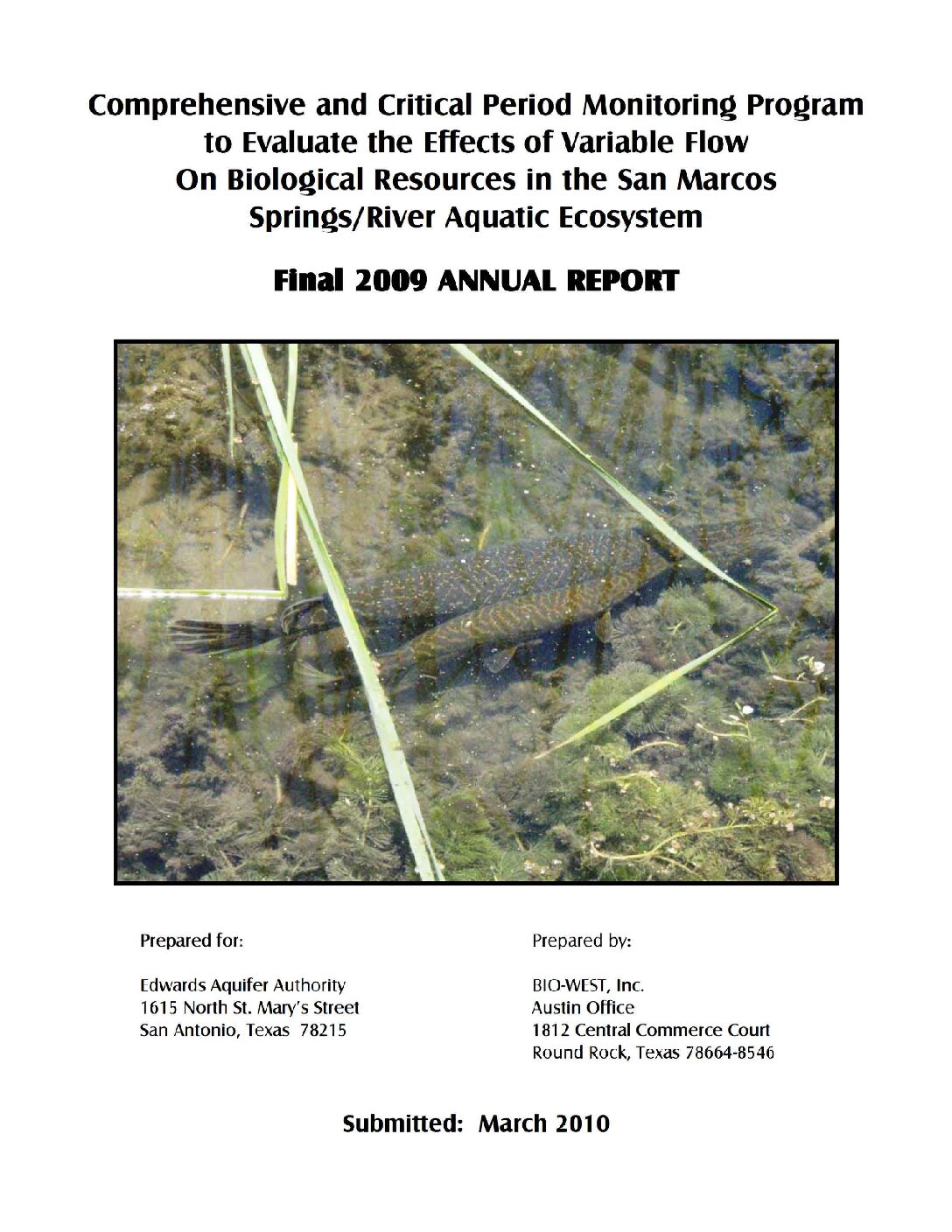
Description: Annual report for 2009 on biota study of San Marcos Springs/River
Location: San Marcos Springs/River
Summary:The purpose of this report is to document the results of all aquatic ecosystem monitoring conducted in 2009 at San Marcos Springs located in San Marcos, Texas. The monitoring and report preparation was performed by BIO-WEST, Inc. Pflugerville, Texas.
[Excerpted from Executive Summary]
This annual summary report presents a synopsis of methodology used and an account of sampling activities conducted during five full sampling events (two Comprehensive Monitoring events and three Critical Period low-flow events) on the San Marcos Springs/River ecosystem in 2009.
Discharge in the San Marcos River in 2009 decreased to levels not observed since this study began in 2000. Springflow was under 100 cubic feet per second (cfs) for 243 days (157 consecutively), with a minimum flow of 83 cfs in June, which was the lowest minimum flow in the river since 1996 (76 cfs). Springflow remained below 120 cfs for three quarters of the year (275 days). Mean monthly flows were below historic average flows for 18 straight months (dating back to March 2008). A myriad of effects were observed as a result of these low flows including elevated water temperatures, changes in aquatic vegetation coverage, and changes in channel morphology. Conditions experienced in 2009 allowed a comprehensive evaluation of the biota over an extended period of time with lower than average flows in the system.
[W]ater chemistry (conductivity, pH, dissolved oxygen, etc.) were similar to the previous Critical Period low-flow event in 2006. Water temperatures exceeded 26.67 ºC (water quality standard set forth by the Texas Commission on Environmental Quality [TCEQ]) at three sites in 2009. Low flows coupled with recreation pressure in summer resulted in the least amount of aquatic vegetation coverage in the City Park Reach since the study's inception.
Texas wild-rice (Zizania texana) coverage experienced similar declines in 2009, with decreases a result of both lower than average flows and recreational pressure. Overall, the total amount of Texas wild-rice decreased by 14% from summer 2008 to fall 2009. This was the lowest total amount since the Critical Period low-flow event in 2006. However, since this program first started measuring the total amount of Texas wild-rice in the river in 2001, it has shown a steadily increasing trend (with occasional decreases). The highest recorded total area of Texas wild-rice measured in the San Marcos River since the inception of the study occurred in January 2009. This year (2009) was the first year in which coverage of Texas wild-rice was quantified in winter (January), when recreation pressure is at its lowest. As the lower than-average flows of 2009 continued and winter gave way to summer, the total area of Texas wild-rice began to decrease.
Changes in aquatic vegetation observed in 2009 influenced fountain darter (Etheostoma fonticola) habitat, and thus, population estimates. As stated earlier, by fall 2009 the middle portion of the City Park Reach had become shallower and much of the Hydrilla and Potamogeton that occupied this area had been uprooted. Since fountain darter population estimates are based on vegetation coverage, the population estimate of fountain darters in this reach declined. In fact, fall 2009 exhibited the lowest overall population estimate of the study period (2000 2009). However, it is important to note that this is based solely on changes in vegetation coverage. When fountain darter density is analyzed by sample event, the overall density for City Park Reach in fall 2009 (8.6/m2) is considerably higher than the long-term average for this reach (4.4/m2). Additional analysis was conducted in 2009 to further explore the relationship between fountain darter abundance/density and discharge. When analyzed over the entire study period, total abundance and overall density show a negative relationship with discharge. That is, as discharge increases, abundance and density of darters decreases. This may be related to darters becoming concentrated into more limited habitat under lower flow conditions or decreased sampling efficiency under high flows.
San Marcos Salamander (Eurycea nana) populations did not appear to be affected by the lower than average flows in the San Marcos River in 2009.
The recent drought in Central Texas provided a unique opportunity to observe the biota in the San Marcos River over an extended period of lower than average flows. Multiple sampling efforts in 2009 provided valuable data on the effects of these flows combined with increased summer recreational pressure. Immediate effects of this pressure were apparent for Texas wild-rice and other aquatic vegetation types, and thus also influenced important fountain darter habitat. However, other study components such as San Marcos salamanders did not appear to be directly affected. Initial conditions and their effects are similar to those observed in 2006 when discharge was also below average.
Comprehensive and Critical Period Monitoring Program to Evaluate the Effects of Variable Flow on Biological Resources in the San Marcos Springs/River Aquatic Ecosystem Final 2012 Annual Report
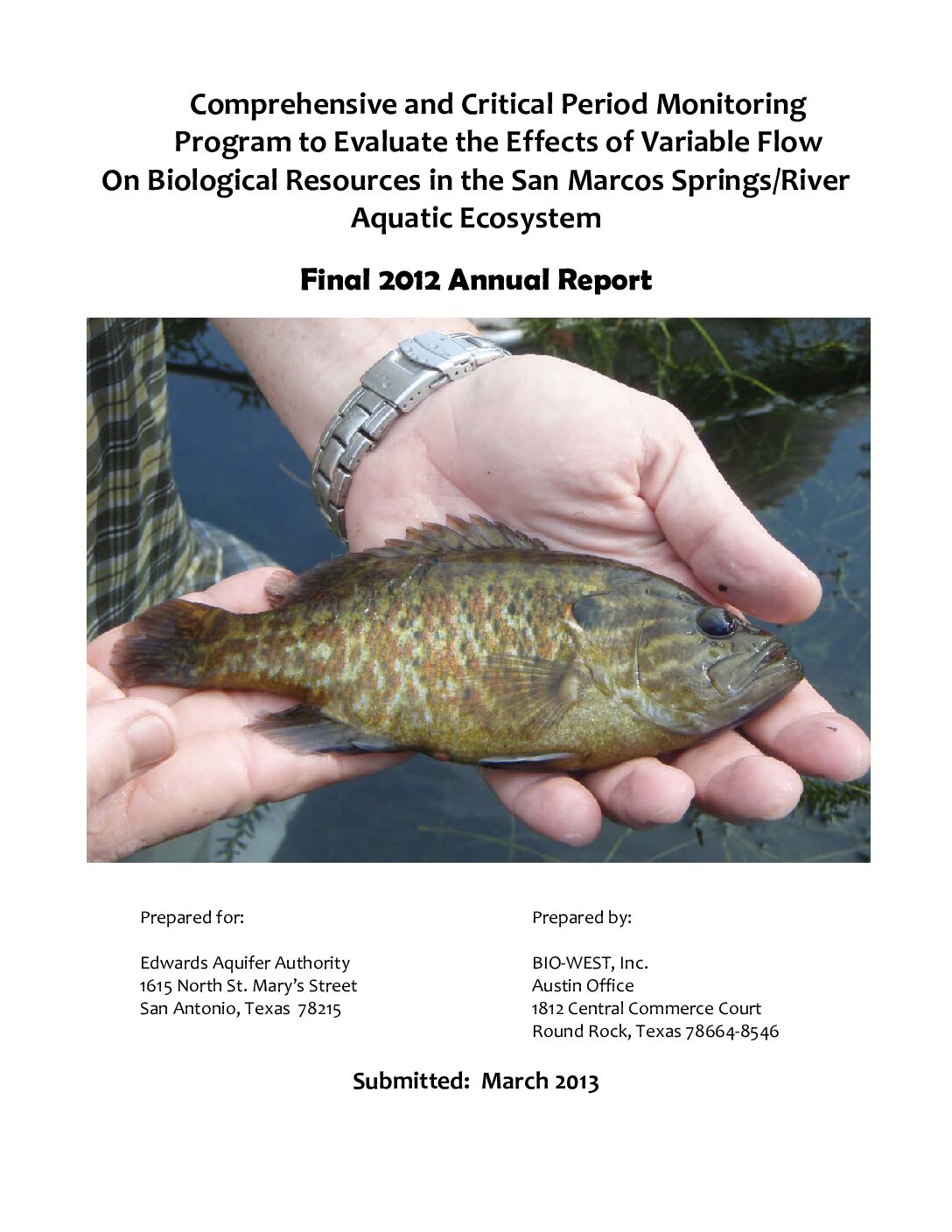
Description: Annual report for 2012 on biota study of San Marcos Springs/River
Summary:This annual summary report presents a synopsis of methodology used and an account of sampling activities conducted during two Comprehensive Monitoring sampling efforts on the San Marcos Springs/River ecosystem in 2012. For ease of comparison, the data are reported in an annual report format similar to previous reports (BIO-WEST 2001a, b 2012a, b).
Flows in the San Marcos River began the year below the historic average, but spring rains bumped flows above 200 cubic feet per second (cfs) from April to July. This was the first time since October 2010 that flows were above 200 cfs. Summer and fall saw little rainfall resulting in flows declining to below 125 cfs to end the year. The minimum discharge in 2012 was 100 cfs (this occurred several times in January). These lower than average flows are a reflection of the ongoing drought in Central Texas.
Close to spring inputs there was little variation in water temperatures even though flows were below average. Water temperatures were highest at Sessom's Creek (tributary heavily influenced by runoff) and Rio Vista Dam (where water is pooled by the rapids downstream).
Total amounts of aquatic vegetation in each of the three reaches (Spring Lake Dam, City Park, and I-35) were below the fall and spring averages observed in this study. Vegetation at the City Park Reach is
most susceptible to seasonal changes due to varying amounts of recreation. In 2012, vegetation increased over winter, and decreased by the end of summer with large areas in the upper section (where recreation pressure is greatest) denuded of vegetation. This boom/bust cycle is typical of this reach, and
is the result of increased recreation pressure combined with effects of the extended drought. Aquatic vegetation at the Spring Lake Dam reach follows a similar pattern as City Park with plants growing over winter, and decreasing by fall. Recreation pressure here is also significant in summer since it is adjacent to a popular swimming area and high density housing, but recently-constructed educational signs may provide value. The greatest impacts on aquatic vegetation in recent years have been observed within the I-35 Reach. Since Rio Vista Dam was transformed into a flow-through rapid in 2006, sedimentation has apparently increased resulted in decreased depths and higher velocities, leading to much lower coverage of vegetation, especially in the upper section of this reach. Additionally, two large riparian trees have fallen into the river within this reach, diverting flow and scouring out areas that were previously covered in vegetation. By fall 2012, total area of aquatic vegetation dropped below 300 square meters (m2), the lowest ever observed in this study. These impacts are significant because the largest patches of Cabomba are found here which hold higher densities of fountain darters relative to other San Marcos aquatic vegetation. This section will continue to be closely monitored for other major changes in habitat.
Coverage of Texas wild-rice (Zizania texana) increased by 16% since 2011 resulting in the highest amount (4,367.1 m2) observed in the San Marcos River since the inception of the study. The largest increases were observed within the upper-third of the river where most of the wild-rice is located. Although one large stand at Sewell Park continues to shrink due to sedimentation blocking flow from the upstream end; however, other plants in the area continue to flourish. Texas wild-rice from the City Park Reach to Bicentennial Park increased by 35% from 2011. Coverage of wild-rice in areas downstream changed little over the year. Physical observations of vulnerable Texas wild-rice plants documented changes in several individual plants during 2012. More plants were emergent and
flowering in spring than in fall. Vegetation mats covering wild-rice were less prevalent in 2012 compared to previous years, likely a result of slightly higher flows. The mats can inhibit photosynthesis and cause plants to die if they are not pushed off (either manually or during higher flow events).
Population estimates of fountain darters (Etheostoma fonticola) were relatively high in spring 2012, but decreased to the lowest estimate observed in the study (2000 2012) by fall. These estimates are based on aquatic vegetation coverage and consequently follow the same pattern. Continued effects of the dam and recreation pressure during the summer both caused decreases in aquatic vegetation coverage in the I-35 Reach. This was exacerbated by a fallen tree which diverted flow and scoured out a previously vegetated area. As discharge increases, the number of fountain darters in each drop net tends to
decrease. This may be a result of clumping of darters into limited habitat under lower flows. Cabomba (native) and Hydrilla (non-native) exhibit the highest densities of fountain darters in the San Marcos River. These densities are typically lower than in the Comal River system. Dip net data reflects the importance of filamentous algae and bryophytes present in Spring Lake to fountain darter reproduction. These two vegetation types hold the highest densities of darters in both the Comal and San Marcos systems, but are not found in the San Marcos River downstream of Spring Lake.
San Marcos salamander (Eurycea nana) densities were typically higher than average in 2012 at all sites. The highest densities were observed at the Hotel Reach where bryophytes are abundant resulting in higher quality habitat. Salamander densities in this area were higher than the study average in both
spring and fall. Densities of salamanders rebounded at the Riverbed Reach in 2012 after construction activities in 2011 led to fewer salamanders. Numbers were slightly above the study average for both spring and fall. Throughout the study, salamander densities have been most variable at Sample Area 21
(~ 5 meters from the dam) because it is below Spring Lake Dam in an area of public access. This site exhibits higher velocities and typically less aquatic vegetation than areas in Spring Lake. Additionally, rocks that salamanders use for cover are often moved due to recreation activities. While spring densities
were similar to previous years, the density in fall was the second highest recorded in the study. Educational signage recently placed in this area is designed to increase public awareness of the sensitive species present, and will hopefully reduce habitat disturbance.
In conclusion, although Central Texas continues to be plagued by a drought, 2012 monitoring activities suggest that populations of threatened and endangered species in the San Marcos Springs/River Ecosystem continue to persist despite the mixed effects of the drought. In fact, coverage of Texas wild-rice reached a new monitoring plan high. Similarly, San Marcos salamander densities were above study averages. In contrast, fountain darter population estimates reached a new low in 2012. However, a spring rebound in population estimates is typically experienced, and is expected by spring 2013. Should
continued low flows persist in summer 2013, fountain darter habitat loss will likely continue due to the combined effects of persistent low flows and recreation within study reaches. Therefore, continued monitoring of aquatic vegetation communities and fountain darter populations is particularly important
in coming years. Additionally, continued monitoring of all study components will allow for assessing the effectiveness of Edward's Aquifer Habitat Conservation Plan (EAHCP) activities being implemented in 2013 and beyond.
Comprehensive and Critical Period Monitoring Program to Evaluate the Effects of Variable Flow on Biological Resources in the San Marcos Springs/River Aquatic Ecosystem Final 2008 Annual Report
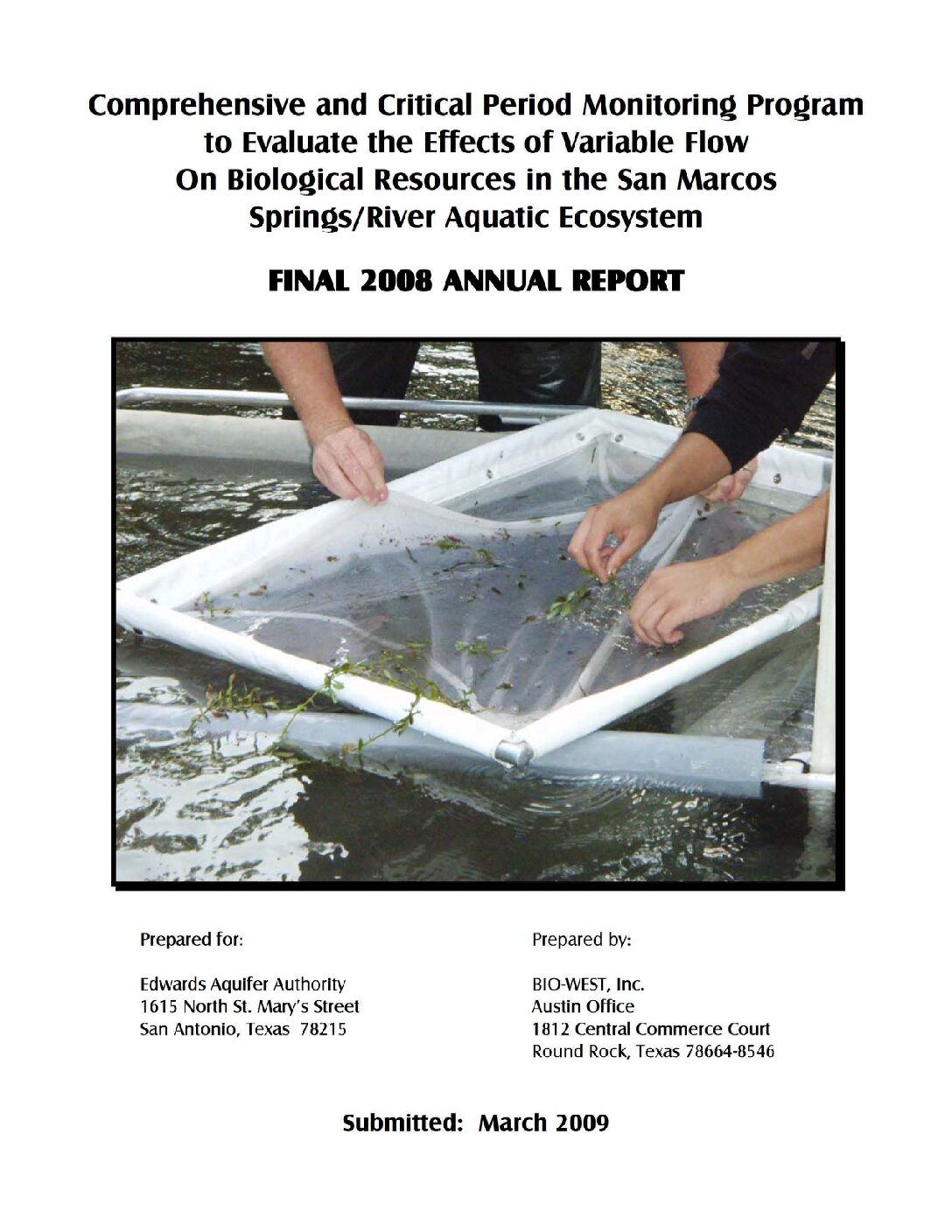
Description: Annual report for 2008 on biota study of San Marcos Springs/River
Location: San Marcos Springs/River
Summary:The purpose of this report is to document the results of all aquatic ecosystem monitoring conducted in 2008 at San Marcos Springs located in San Marcos, Texas. The monitoring and report preparation was performed by BIO-WEST, Inc. Pflugerville, Texas.
[Excerpted from the Executive Summary]
This annual summary report presents a synopsis of methodology used and an account of sampling activities including sampling conditions, locations, and data obtained during Comprehensive Monitoring Efforts conducted on the San Marcos Springs/River ecosystem in 2008. Very few precipitation events in the region contributed to below average flows in the river throughout the year. Discharge peaked at the beginning of the year and continued to decline through December where flows declined below 100 cubic feet per second (cfs). This flow level is designed to trigger Critical Period sampling. However, because the Fall Comprehensive Effort was completed in late October / early November at approximately 106 cfs, it was determined that a full Critical Period sampling event will be performed in January 2009 (approximately 60 days post Fall Comprehensive sampling) provided flows remain below 100 cfs.
For the fountain darter (Etheostoma fonticola), habitat use is largely influenced by aquatic vegetation, and assessments of habitat availability were conducted by mapping vegetation in the study reaches during each sampling event. With flows below average in 2008 there was a greater potential for anthropogenic disturbance because vegetation in shallow water areas became more accessible to recreation. This was observed at the Spring Lake Dam Reach between summer and fall where a section of Texas wild-rice plants appeared to be uprooted in the eastern spillway below Spring Lake. In addition, many rocks were moved to create dams and other structures in the area.
Vegetation in the City Park Reach increased by spring 2008, but decreased by fall. Lower flows in 2008 made typically deeper sections of this reach accessible to foot traffic during the summer and fall. As a result, Hydrilla decreased in surface are in the middle section of the reach. Hygrophila was one of the few vegetation types that increased when it filled in a section previously dominated by Sagittaria in the upper section of the City Park Reach.
Texas wild-rice increased 7 percent in surface area from 2007 and was the highest amount recorded by BIO-WEST since the inception of the study in 2001. As in previous years, most of the growth took place in the upper reaches of the San Marcos River.
As in 2007, fountain darter densities were highest in Cabomba and Hydrilla. Cabomba is a native vegetation type, while Hydrilla is non-native and considered to be very invasive. More fountain darters were found in the spring at the I-35 Reach than at the City Park Reach due to the presence of Cabomba. As in previous years, fountain darters collected in dip net sampling were most abundant at the Hotel Reach. Length frequency analysis confirmed a spring reproductive peak of this endangered fish at all river sites. Fountain darter reproduction continues to be a year-round phenomenon within Spring Lake.
San Marcos salamander (Eurycea nana) densities increased at both Spring Lake sites in 2008 while decreasing slightly at the site below Spring Lake dam. Of the federally-listed species in the San Marcos system, the San Marcos salamander appears to be the least affected by lower flow conditions periodically observed over the time period covered by this study. The impacts when observed are typically due to increased recreational use of the river. Populations of San Marcos salamanders in Spring Lake have remained stable throughout the seven plus years of monitoring.
The past several years have exhibited different yearly flow regimes leading to a very informative flow sequence in the San Marcos River. After the lower flows of 2006, 2007 was a relatively average flow year, while 2008 was again considerably below average. Overall, the biological communities in the river have responded well to the flow sequence experienced these past several years. If the current drought continues, 2009 may provide a valuable opportunity to examine how these species and their habitats respond to extended durations of lower flow conditions or more extreme low-flow conditions
Comprehensive and Critical Period Monitoring Program to Evaluate the Effects of Variable Flow on Biological Resources in the San Marcos Springs/River Aquatic Ecosystem Final 2007 Annual Report
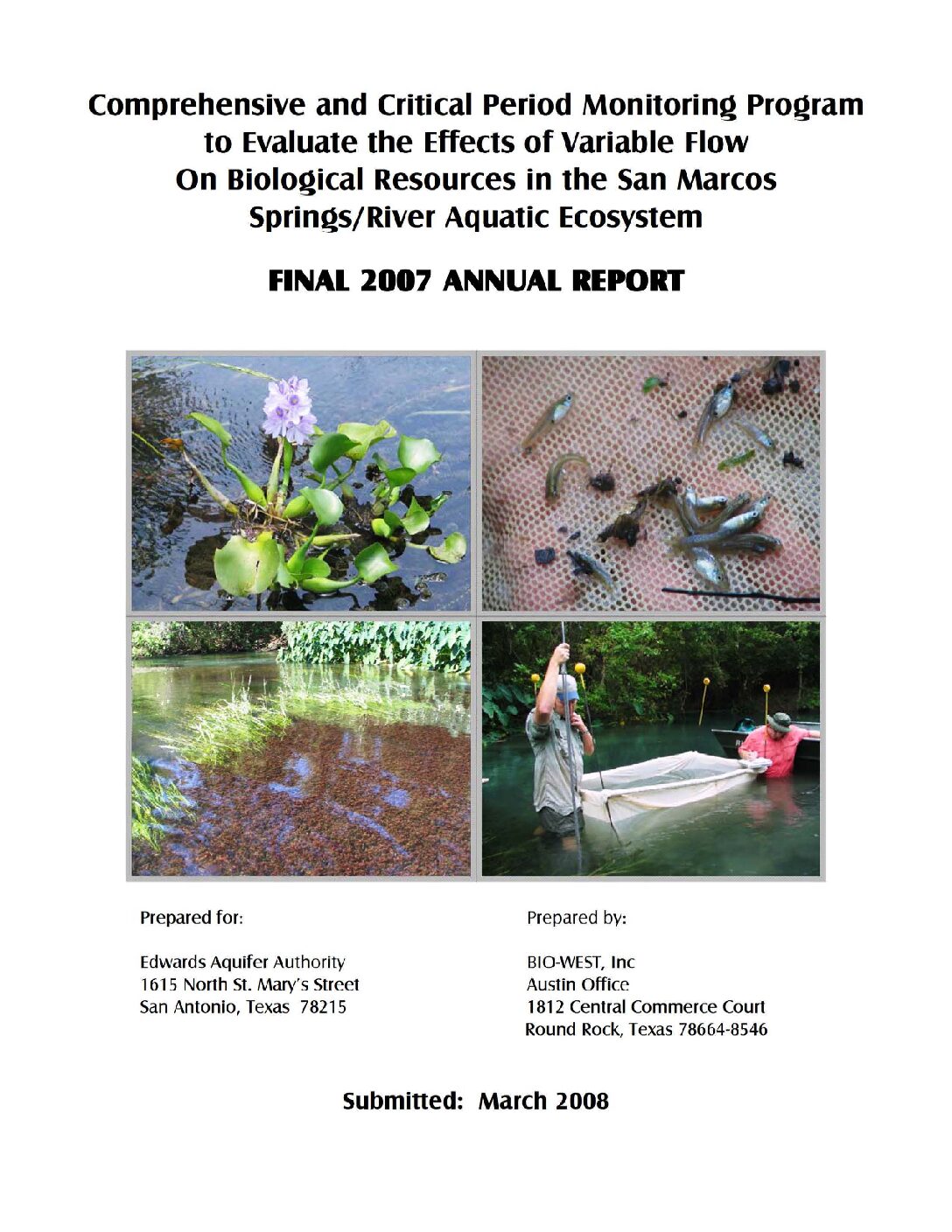
Description: Annual report for 2007 on biota study of San Marcos Springs/River
Location: San Marcos Springs/River
Summary:The purpose of this report is to document the results of all aquatic ecosystem monitoring conducted in 2007 at San Marcos Springs located in San Marcos, Texas. The monitoring and report preparation was performed by BIO-WEST, Inc. Pflugerville, Texas.
[Excerpted from Executive Summary]
This annual summary report presents a synopsis of methodology used and an account of sampling activities including sampling conditions, locations, and data obtained during two sampling events (Comprehensive Monitoring Effort) conducted on the San Marcos Springs/River ecosystem in 2007. Limited recharge in the river in 2006 led to decreased flows in the system to start 2007, which is when the lowest discharge in the river was recorded this year. Significant precipitation events in winter and summer resulted in flows well above the historical average throughout the year.
Overall, aquatic vegetation in the San Marcos River decreased in 2006 because of direct and indirect effects of the low flows. Increased flows in 2007 appeared to stimulate growth and encourage colonization of areas that were bare as a result of mechanical disturbance in 2006 Texas wild-rice (Zizania texana) was the most vulnerable plant to mechanical disturbance in 2006 decreasing nearly 75% in this reach after people pulled out many of the leaves. Fortunately, many of the root-wads remained, and in 2007 these roots enabled the plants to recover relatively quickly in the higher flows. Texas wild-rice plants in the eastern arm of the reach increased their surface area several times, and several new plants were also found. Downstream, plants that had been disturbed in 2006 began to grow back together, and seeds could be seen by summer. Educational signs placed along the banks in this reach were a great contribution to educating the public about wild-rice and other endangered organisms in the system. The City Park Reach exhibited a similar resurgence in vegetation area.
The suitability of the various vegetation types (as measured by fountain darter density) is considerably lower in the San Marcos River when compared with the Comal River. As expected, fountain darter densities were highest in Cabomba and surprisingly, Hydrilla. It is unclear why Hydrilla was a preferred habitat in 2007, but further monitoring may provide an answer. Similar to previous years, the smallest darters were captured in spring indicating a spring reproductive peak.
Exotic species continue to inhabit the San Marcos River, but did not appear to have any noticeable impacts during 2007. San Marcos salamanders (Eurycea nana) continued to be common in Spring Lake where large areas are covered in filamentous algae. Salamander density below Spring Lake Dam was near the highest observed since the inception of this study.
Following an extremely low flow year (2006) in the San Marcos River, the biological communities responded well in 2007. Texas wild-rice re-colonized several areas where it had been previously stripped, and estimates of fountain darters continued to be high.
Comprehensive and Critical Period Monitoring Program to Evaluate the Effects of Variable Flow on Biological Resources in the Comal Springs/River Aquatic Ecosystem Final 2007 Annual Report
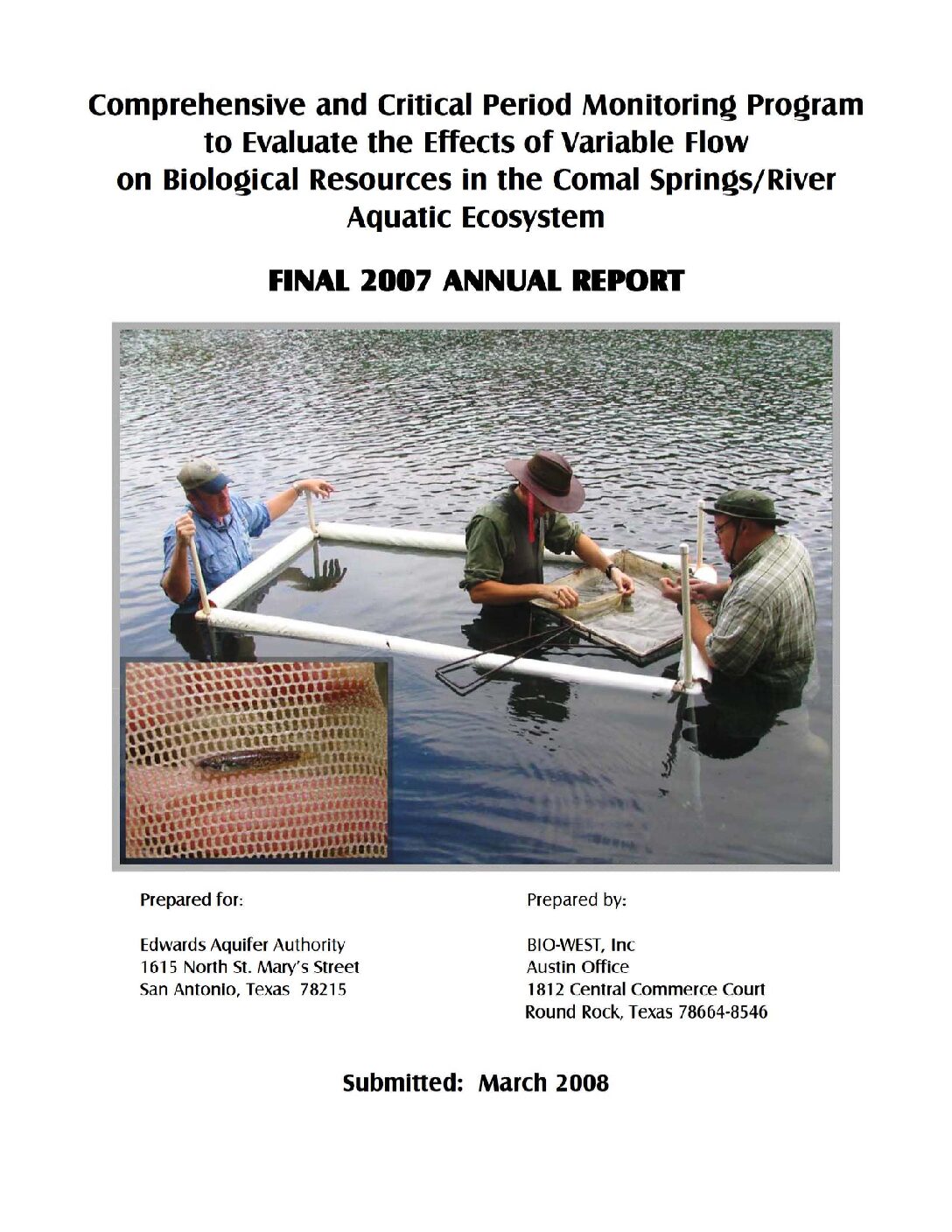
Description: Annual report for 2007 on biota study of Comal Springs/River
Location: Comal Springs/River
Summary:The purpose of this report is to document the results of all aquatic ecosystem monitoring conducted in 2007 at Comal Springs located in New Braunfels, Texas. The monitoring and report preparation was performed by BIO-WEST, Inc. Pflugerville, Texas.
[Excerpted from the Executive Summary]
This annual summary report presents a synopsis of methodology used and an account of sampling activities, including sample conditions, locations and raw data obtained during two sampling events (Comprehensive Monitoring Effort) conducted on the Comal Springs/River ecosystem in 2007.
In 2007, precipitation events during the first half of the year contributed to flows above the historical average for three-quarters of the year. A considerable rain event occurred in July and the flow in the river peaked at 1,980 cfs.
Higher flows following a below average discharge year had a myriad of effects on the biota in the Comal River/Springs Ecosystem. Aquatic vegetation continued to flourish, but in some reaches non-native plants continued to outcompete native flora. This may affect fountain darter populations in the future as these fish prefer native vegetation. In addition, another native plant, Cabomba, was no longer observed in [the Upper Spring Run] reach in 2007. Vallisneria was the dominant vegetation in the Landa Lake reach in 2007 The interplay between native and non-native vegetation was observed in this reach in 2007. From fall 2006 to spring 2007 Hygrophila stands in the central portion of the reach swelled, while Ludwigia in this area decreased. By fall 2007, Ludwigia surface area increased, while Hygrophila in the same region decreased. This trend has continued for several years and may have an important effect on fountain darter populations because sampling has shown that darters prefer Ludwigia to Hygrophila.
Drop-netting continues to be the best method for sampling fountain darters in varied vegetation types without harming the endangered fish. Although flows were higher this year, bryophytes were present throughout much of the Upper Spring Run and Landa Lake reaches. This led to the highest population estimates in these reaches since 2003. As in previous years data reflected a spring reproduction peak of this species based on length frequency distributions showing the smallest fish present in spring.
Snorkel surveys of salamanders in the spring runs exhibited a slight increase from 2006 with total numbers at or slightly above average. Fourteen different invertebrate taxa were observed at three drift net sites within Comal Springs in 2007. In 2007, four different species of Stygobromus were collected within the Comal Springs making it (and the San Marcos Springs) the only locality in North America with four co-occurring Stygobromus species. Fewer individuals of the Comal Springs riffle beetle (Heterelmis comalensis) were collected in 2007, which was likely related to mechanical disturbance to several of the cotton rags used in capturing them. [F]urther study is needed to understand the effects of [the gill] parasite at low-flows.
Overall, the higher discharge in 2007 positively affected fountain darter and plant growth. However, it appeared that in some reaches non-native vegetation continues to outcompete the native flora. This may have serious effects on fountain darter populations in certain reaches.
Though the comprehensive portion of the study has been reduced to two annual samples (plus a limited summer effort), it is still adequate to maintain a continuous record of conditions. Maintaining this continuous record is vital since antecedent conditions influence community-level response to reduced discharge conditions. Sampling only during a low-flow event simply does not provide the necessary context to adequately assess changes that occur during such conditions. As such, comprehensive monitoring will continue in the Comal Springs/River ecosystem in 2008.
Comprehensive and Critical Period Monitoring Program to Evaluate the Effects of Variable Flow on Biological Resources in the Comal Springs/River Aquatic Ecosystem Final 2003 Annual Report
Description: Annual report for 2003 on biota study of Comal Springs/River
Location: Comal Springs/River
Summary:The purpose of this report is to document the results of all aquatic ecosystem monitoring conducted in 2003 at Comal Springs located in New Braunfels, Texas. The monitoring and report preparation was performed by BIO-WEST, Inc. Pflugerville, Texas.
[Excerpted from the Executive Summary
This annual summary report presents a synopsis of methodology used and an account of sampling activities, including sample conditions, locations and raw data obtained during three quarterly sampling events (Comprehensive Monitoring Effort), conducted on the Comal Springs/River ecosystem in 2003. There were no low-flow critical periods or high-flow events triggered in 2003. In 2003, flows remained high through the summer and did not follow the typical pattern of decline.
In 2003, flows remained high through the summer and did not follow the typical pattern of decline. In 2003, flows remained high through the summer and did not follow the typical pattern of decline. Baseline data have continued to show that the Comal River is an ecosystem with high water quality according to the chemical and physical variables that were measured.
After the scouring effects of floods in both 2001 and 2002, many vegetation types responded with rapid re-growth and expanded to a total coverage that was far greater than in previous samples. For the most part, these increases in vegetation coverage were maintained throughout 2003. However, there was some decline in coverage that occurred in the fall of 2003 in many reaches despite the high flows and presumably favorable conditions. This emphasizes the fact that conditions are dynamic even when flows remain relatively constant and habitat should not be predicted on flows alone.
One of the more important observations with vegetation composition in 2003 was the dramatic shift in habitat within the Old Channel Reach. Prior to 2003, filamentous algae dominated this reach and provided the highest quality habitat (supported the greatest density) for fountain darters. Beginning in the fall of 2002 Hygrophila and later Ludwigia appeared in the reach and have grown significantly in 2003 to nearly complete coverage of areas that had previously supported filamentous algae.
In previous years, the greatest number of fountain darter observations occurred in the spring and the fewest in the fall, but that trend was reversed in 2003. Two areas of additional concern to fountain darters, the density of giant ramshorn snails (Marisa cornuarietis) and evidence of gill parasites on fountain darters, were monitored in 2003. By all indications the densities of giant ramshorn snails observed in the Comal ecosystem during the study period to date (including the 2000 low-flow events) pose no serious threat to the aquatic vegetative community (i.e., fountain darter habitat). However, because of the impact that this exotic species can have under heavier densities, close monitoring of this species should continue. Gill parasites were found on fountain darters in varying densities among different sample areas and appear to be concentrated in areas with slow-moving water and high snail densities.
It is difficult to evaluate the influence of springflow on the abundance of invertebrates found in the net because discharge remained so similar among the three sample events in 2003, however, some interesting patterns emerged.
Comal Springs salamanders were observed in each [Spring Island ] area during each sampling event. In 2003, stable flows reduced the sediment accumulation and more salamanders were observed in the Spring Run 3 sample area. As documented via SCUBA surveys, the Comal Springs salamander population was maintained in the deeper portion of Landa Lake throughout the study period.
More data from lowflow periods (particularly from an extended low-flow period) are essential to fully evaluate the biological risks associated with future critical periods (high or low flow). This study remains the most comprehensive biological evaluation that has ever been conducted on the Comal River ecosystem.
Comprehensive and Critical Period Monitoring Program to Evaluate the Effects of Variable Flow on Biological Resources in the Comal Springs/River Aquatic Ecosystem Final 2010 Annual Report
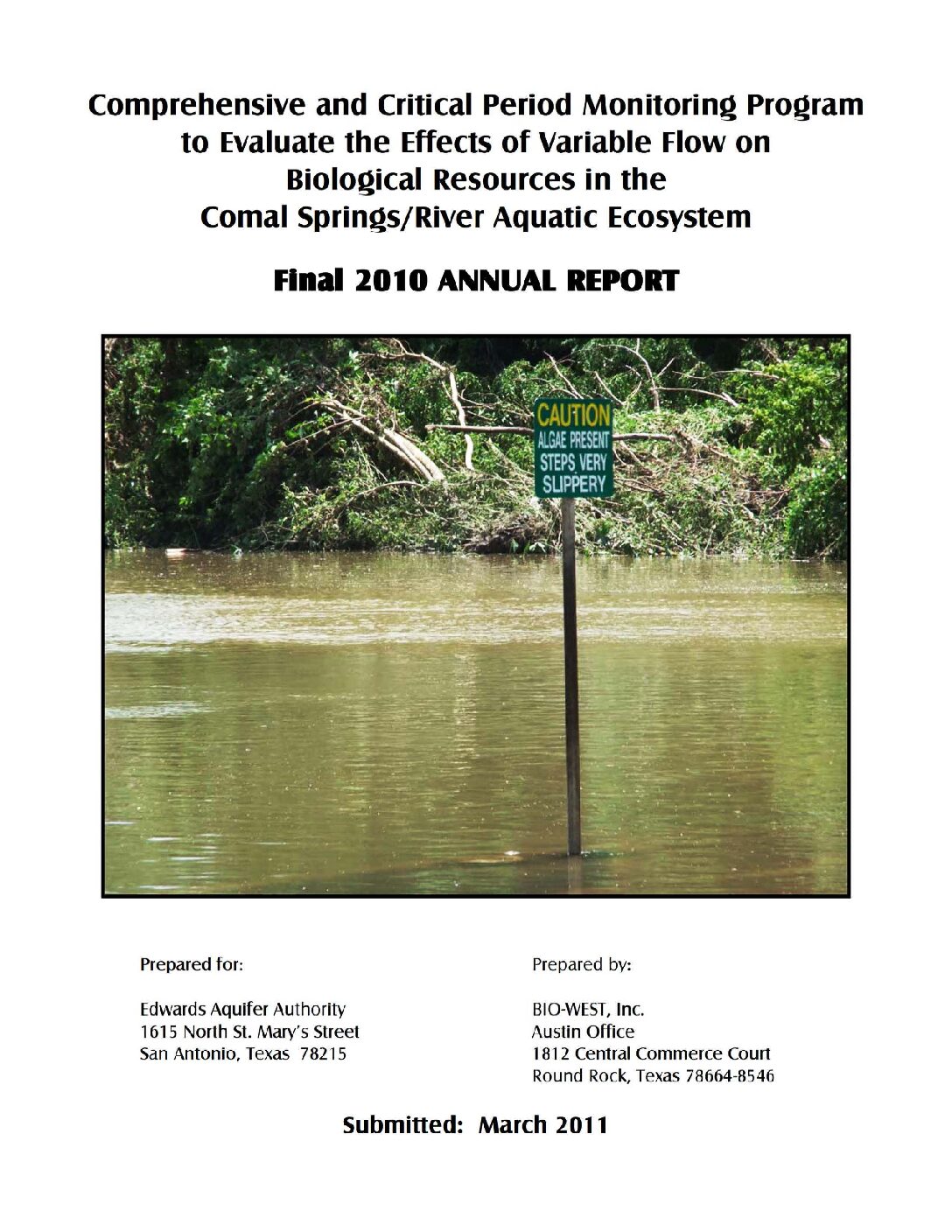
Description: Annual report for 2010 on biota study of Comal Springs/River
Location: Comal Springs/River
Summary:The purpose of this report is to document the results of all aquatic ecosystem monitoring conducted in 2010 at Comal Springs located in New Braunfels, Texas. The monitoring and report preparation was performed by BIO-WEST, Inc. Pflugerville, Texas.
[Excerpted from the Executive Summary]
This annual summary report presents a synopsis of methodology used and an account of sampling activities conducted during three sampling events (two Comprehensive Monitoring efforts and one Critical Period high-flow effort) on the Comal Springs/River ecosystem in 2010. In 2010, increased rainfall and subsequent aquifer recharge allowed central Texas to come out of the drought that it had experienced for the past couple of years. Flows were above the historic average in the Comal River to begin 2010, which was a trend that continued throughout the entire year. In early June, a major flood event occurred on the Comal River. The flows on June 9, 2010 peaked at 7,280 cubic feet per second (cfs), the highest daily average since 2002 (13,400 cfs). This Critical Period event was caused by an 18-hour rainfall total of 7 12 inches, with much of it centered over the City of New Braunfels. Extensive damage to areas adjacent to the Comal River occurred.
Aquatic vegetation at the four study reaches were affected by increased spring flows and the flood event in 2010. The flooding in June changed the Upper Spring Run Reach the most because a lot of the flow came down Blieder's Creek, hich enters the Comal River just upstream of this reach. Over 80% of the aquatic vegetation in this reach was removed by the high-flow event, and only strongly-rooted Sagittaria remained. By fall, Hygrophila and bryophytes had regained a toe-hold in the reach, but vegetation remained scarce. Other native vegetation (Ludwigia, Sagittaria, Cabomba) were reduced after the flood, but by fall they had reestablished in most areas where they were previously found.
Unfortunately, flooding in June decimated much of the bryophytes and filamentous algae which are most vulnerable to scouring in high flows. This resulted in the lowest normalized population estimate of fountain darters since the inception of the study. Impacts were most notable at the Old Channel and Upper Spring Run sites because much of the vegetation was removed in these reaches (filamentous algae and bryophytes were absent from both sites in June). Fountain darter populations began to recover by fall, and if previous high-flow events are any indication, they should continue to increase as aquatic vegetation grows back.
Gill parasites in the Comal River were monitored throughout 2010. A specific study at three sites was conducted to compare overall gill parasite concentrations from 2010 to those observed during 2006. A significant decline in cercarial densities was observed from 2006 to 2010.
Comal Springs salamander (Eurycea sp.) populations decreased at all sites following the June flood except at the Spring Island East Outfall. Sampling of invertebrate populations is confined to areas near spring upwellings because these animals often are not observed until they are released or come out of the springs. As a result, these populations seemed less affected by the flooding than other aquatic organisms studied in the Comal River.
Unfortunately, the flooding did affect the Comal Springs riffle beetle (Heterelmis comalensis) sampling effort because many of the lures (cotton rags) used to catch these invertebrates were washed away or buried by shifting substrates. In 2010, a new locality for the Comal Springs riffle beetle and Peck's Cave amphipod (Stygobromus pecki) was chosen just downstream of the confluence of Spring Runs 1 and 2. As in previous years, populations were patchily distributed and abundance varied considerably in 2010.
The flood in June resulted in a myriad of effects on the biota in the system. Data from the past 10 years indicate that the Comal River/Springs ecosystem contains a highly resilient ecological community that is able to withstand these types of events. However, anthropogenic and natural stressors will likely continue to exacerbate the magnitude and frequency of high and low-flow events into the future. Therefore, continued monitoring and applied research will be vital to provide guidance on management strategies necessary for preserving this unique ecosystem.
Comprehensive and Critical Period Monitoring Program to Evaluate the Effects of Variable Flow on Biological Resources in the Comal Springs/River Aquatic Ecosystem Final 2009 Annual Report
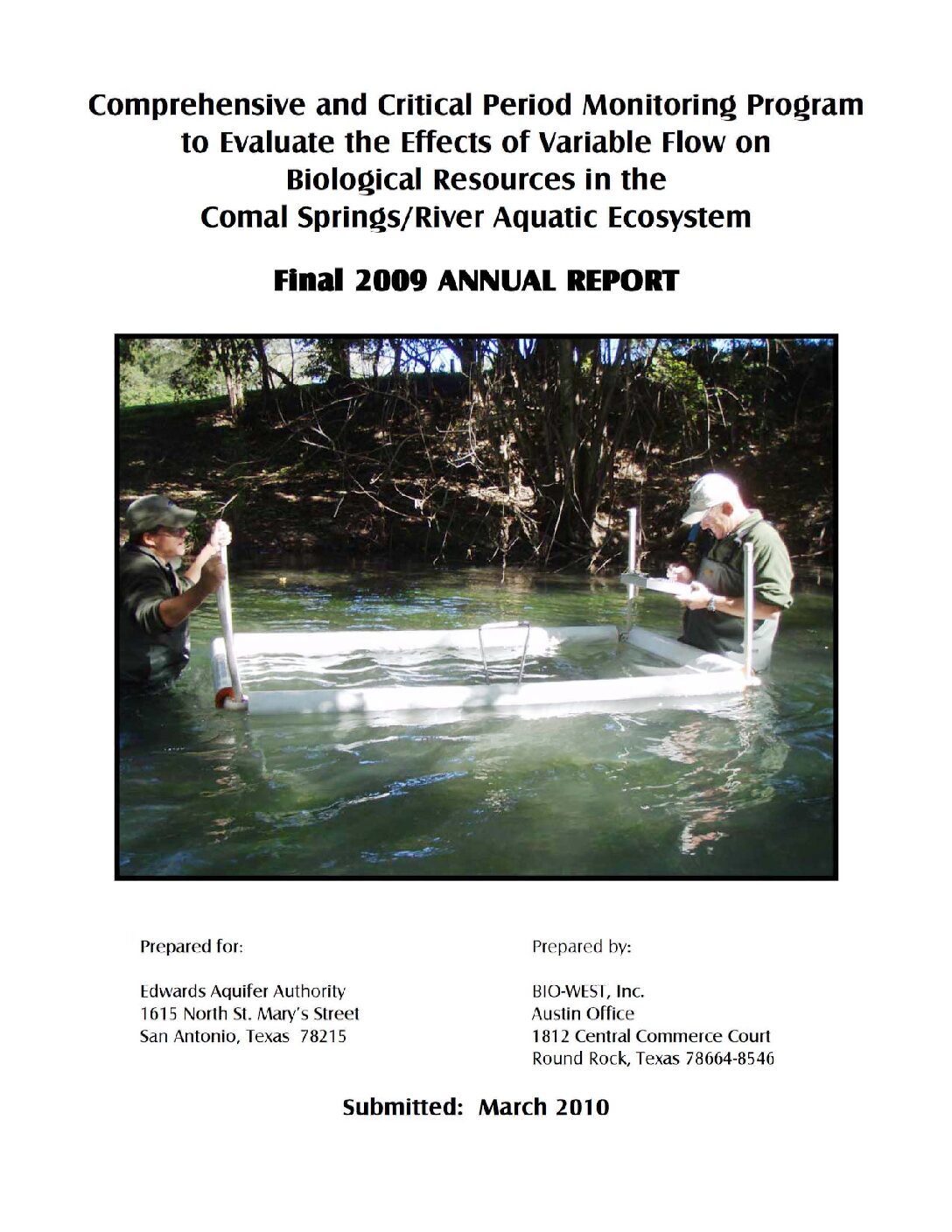
Description: Annual report for 2009 on biota study of Comal Springs/River
Location: Comal Springs/River
Summary:The purpose of this report is to document the results of all aquatic ecosystem monitoring conducted in 2009 at San Marcos Springs located in San Marcos, Texas. The monitoring and report preparation was performed by BIO-WEST, Inc. Pflugerville, Texas.
[Excerpted from the Executive Summary]
This annual summary report presents a synopsis of methodology used and an account of sampling activities conducted during three sampling events (two Comprehensive Monitoring efforts and one Critical Period low-flow effort) on the Comal Springs/River ecosystem in 2009. The year 2009 was the culmination of a prolonged drought in central Texas that began in 2007. Discharge in the Comal River was at its lowest since 2000.
The variable flows of 2009 had a myriad of effects on the aquatic vegetation in all reaches. Fountain darter abundance in the Comal River was again variable in 2009, but within the range of previous years observed throughout this study. In areas near spring upwellings with native vegetation (e.g., bryophytes) there appears to be year-round reproduction. However, dip net data confirm an early spring reproductive peak for these fish in other areas of lower quality habitat.
Although the total number of Comal Springs riffle beetles (Heterelmis comalensis) captured decreased slightly from 2008 to 2009, numbers were similar to those observed in 2007. The total number of salamanders observed during the spring and Critical Period sampling efforts were the highest since the inception of the study.
Flows from Comal Springs in 2009 were the lowest observed since 2000, but impacts on the biota in the ecosystem appeared to be minimal. Continued monitoring over an extended period of lower than average flows is necessary to fully understand the impact of discharge on the varied biota in the system.
Comprehensive and Critical Period Monitoring Program to Evaluate the Effects of Variable Flow on Biological Resources in the Comal Springs/River Aquatic Ecosystem Final 2008 Annual Report
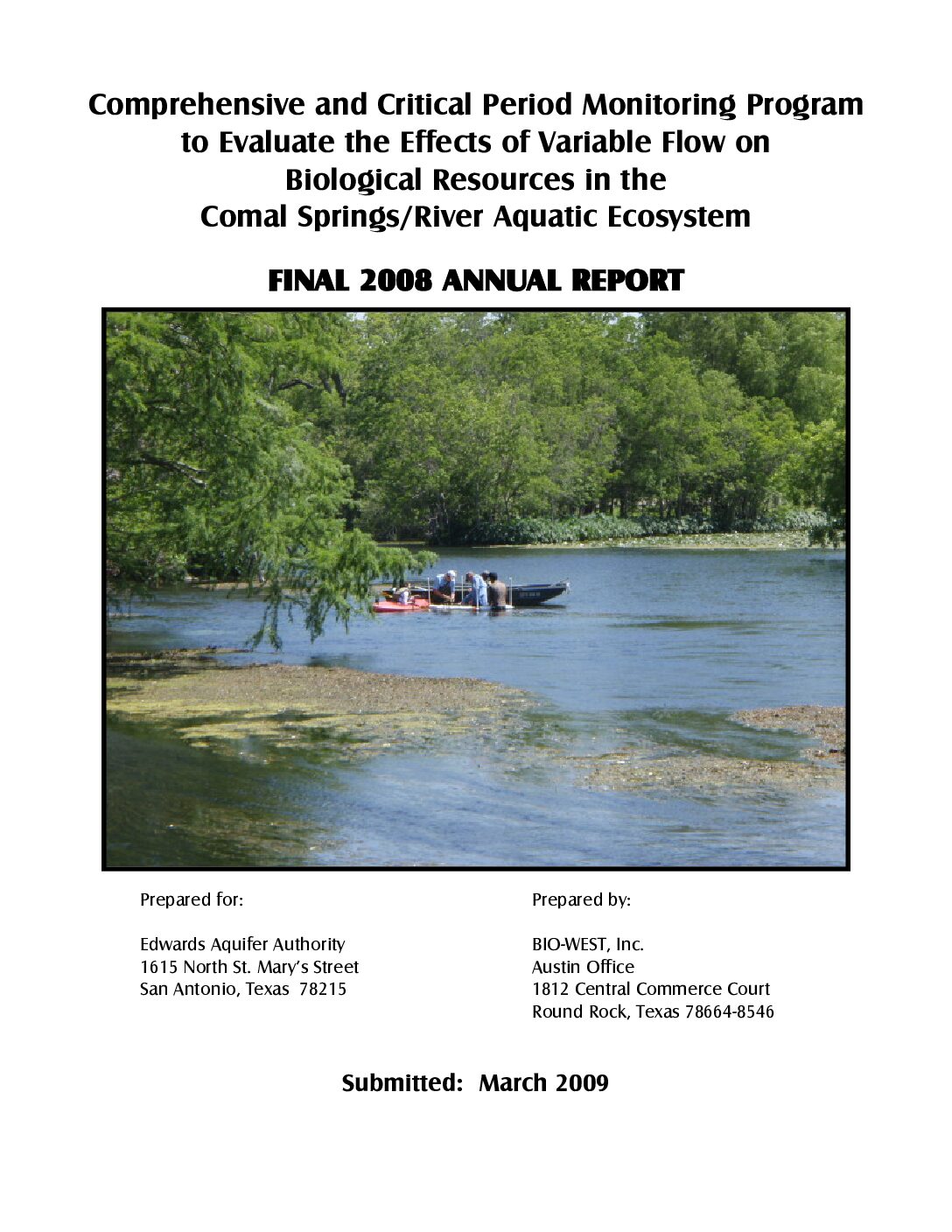
Description: Annual report for 2008 on biota study of Comal Springs/River
Location: Comal Springs/River
Summary:The purpose of this report is to document the results of all aquatic ecosystem monitoring conducted in 2008 at Comal Springs located in New Braunfels, Texas. The monitoring and report preparation was performed by BIO-WEST, Inc. Pflugerville, Texas.
[Excerpted from the Executive Summary]
Discharge in the Comal River was lower in 2008 compared to 2007, but no Critical Period events were triggered. Even with the extreme drought in central Teby fall they became fragmented possibly due to an early fall precipitation event. Vallisneria was the dominant vegetation in Landa Lake in 2008, where it was mostly found in deeper areas of the lake. Non-native Hygrophila dominated the central section of the reach near several islands. Native Ludwigia fragmented more in 2008 and only a handful of small plants remain in Landa Lake.
Filamentous algae covered enough area in the Old Channel Reach in 2008 to justify sampling for fountain darters within it. This is important to note as conditions have not allowed this for several years. Filamentous algae have consistently had the highest density of fountain darters of any vegetation type. Normalized population estimates [of fountain darters] for spring 2008 were the highest recorded since 2003. As in previous years, length-frequency distribution data reflected a spring reproductive peak for fountain darters.
Spring Run 1 and Spring Run 3 yielded almost twice the number of salamanders in 2008 compared to 2007. On the contrary, Spring Island salamander counts were considerably less in 2008. No salamander observations at the Spring Island Spring Run for the third straight sampling session is likely because of the removal of fist-size rocks (preferred habitat) at this site.
Similar to 2007, species of the genus Stygobromus and Lirceolus continued to be most abundant at all sites. Peck's cave amphipod (Stygobromus pecki) was the dominant amphipod at all sites. There were substantially more Comal Springs riffle beetles (Heterelmis comalensis) collected in 2008 than in 2007.
Near average flows in the Comal River in 2008 continued to maintain fountain darter populations in this unique springs system. Non-native and native vegetation continued to compete at several reaches, but with the exception of Ludwigia at Landa Lake, surface areas were similar to 2007. The presence of bryophytes in some of the reaches will continue to harbor large populations of fountain darters. If the central Texas drought continues into 2009, resulting flow decreases may trigger low-flow Critical Period sampling events. These events, although undesirable for the public and environment should provide much needed information on biotic responses to more extreme conditions.
Comprehensive and Critical Period Monitoring Program to Evaluate the Effects of Variable Flow on Biological Resources in the San Marcos Springs/River Aquatic Ecosystem Final 2006 Annual Report
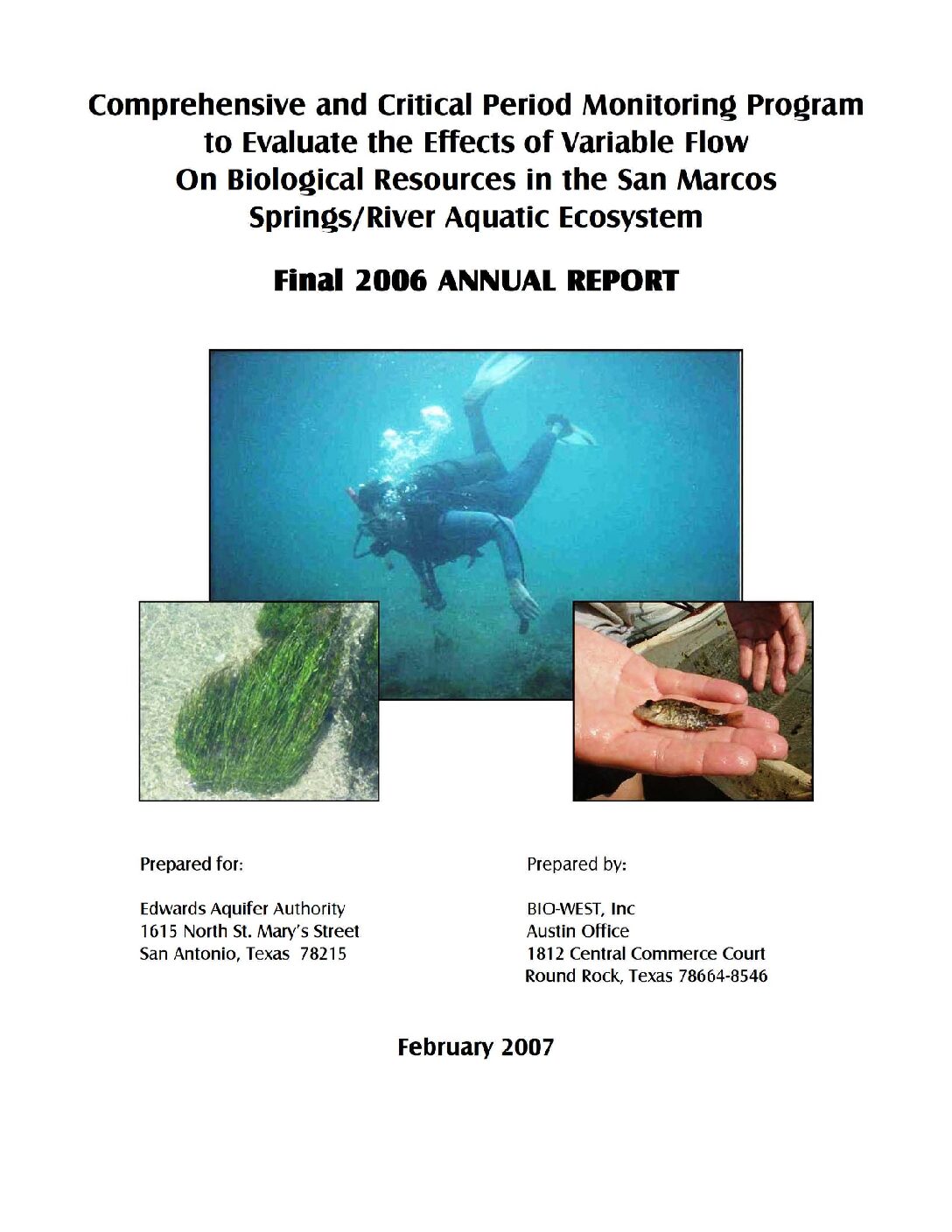
Description: Annual report for 2006 on biota study of San Marcos Springs/River
Location: San Marcos Springs/River
Summary:The purpose of this report is to document the results of all aquatic ecosystem monitoring conducted in 2006 at San Marcos Springs located in San Marcos, Texas. The monitoring and report preparation was performed by BIO-WEST, Inc. Pflugerville, Texas.
[Excerpted from the Executive Summary]
This annual summary report presents a synopsis of methodology used and an account of sampling activities including sampling conditions, locations, and data obtained during two quarterly sampling events (Comprehensive Monitoring Effort) and two Critical Period events conducted on the San Marcos Springs/River ecosystem in 2006. Limited recharge was experienced in 2006, and as a result Critical Period sampling events were triggered when total discharge in the San Marcos River decreased to near 100 cubic feet per second (cfs) in July, and below 95 cfs in September.
The extended period of limited recharge leading up to and extending throughout 2006 caused discharge in the San Marcos River to decline to levels not experienced since 1996. When reviewing the annual discharge in the San Marcos River since the installation of the USGS gage in fall 1956, the 2006 average annual discharge of 112 cfs was the eighth lowest on record.
Water Quality grab samples were collected at multiple sites in Spring Lake and the San Marcos River to evaluate select parameters during the two Critical Period sampling events. Total Suspended Solids (TSS) were low at all sites in Spring Lake, and showed an increasing trend in the San Marcos River between Critical Period events. Nitrate values at the Spring Lake and San Marcos River sites were higher than the average from 2000-2002 for Critical Period 1 with the source of these nitrates most likely water coming out of the springs.
A general trend of decreasing vegetation area was observed at the Spring Lake Dam site in 2006. At the mouth of Sessom's Creek a large island developed as a result of large sediment loads carried by this flashy stream. This new bank was mapped and resulted in a loss of available area for vegetation growth in the Spring Lake Dam Reach. By the first Critical Period event, much of the vegetation had decreased in the vicinity of this island. Another considerable loss of vegetation occurred in this reach in September, when approximately 234 m2 of Texas wild-rice was manually pulled out along the eastern shore of the Spring Lake Dam Reach. It is clear that both the Texas wild-rice removal and rock art were caused directly by humans. By November, the Texas wild-rice in this area had begun to recover, but was still severely fragmented as a result of the mechanical destruction. Texas wild-rice changed little from 2005 to 2006 in the City Park Reach while increasing in the I-35 Reach.
Of all the biological communities monitored in the San Marcos River in 2006, Texas wild-rice in the upper most reaches of the San Marcos River (Spring Lake Dam Reach through Sewell Park) seemed to be affected most by the lower discharge conditions in 2006.
Dip net data and visual observations (SCUBA) from Spring Lake confirmed high numbers of fountain darters throughout 2006 and again demonstrated that small darters are present throughout the year indicating year round reproduction.
Exotic species continue to inhabit the San Marcos River, but did not appear to have any noticeable impacts during the lower discharge conditions of 2006. The sheer number and varying sizes of suckermouth catfish (Hypostomus sp.) that were removed by the U.S. Fish and Wildlife Service (USFWS) biologists during the reconstruction of Rio Vista Dam is cause for concern and close future observation of this exotic species. The rock bass (Ambloplites rupestris) and sailfin molly (Poecilia latipinna) were the most abundant exotic species collected in routine sampling. The giant ramshorn snail (Marisa cornuarietis) can have severe detrimental impacts on vegetation, but only 15 live specimens have been caught from 2004 to 2006 in drop trap sampling. The gill parasite that has been reported to infect the fountain darter in the Comal system is present in the San Marcos River but gill flaring was rarely observed on collected fountain darters in 2006.
During 2006, the San Marcos Salamander remained most abundant in Spring Lake, with densities in the lake and river comparable to previous years.
In summary, increased recreational access during 2006 created the greatest effects on the threatened and endangered species in the San Marcos Springs/River ecosystem. These effects included destruction of Texas wild-rice and habitat modification for the San Marcos salamander (humans physically moving rocks below Spring Lake Dam) and fountain darter (increased foot traffic through commonly deeper areas). Direct effects of the lower discharge conditions were not evident for the San Marcos salamander at the discharge levels measured in 2006. Direct effects on the fountain darter may have been experienced with some compensatory reproduction occurring as a result of lower discharge conditions, however, this is not an absolute, nor did the response have any measurable impact on the fountain darter population in the San Marcos River in 2006. Finally, the greatest direct impact associated with the lower discharges experienced in 2006 was to Texas wild-rice with an overall reduction in coverage (ˆ¼3% entire river and ˆ¼21% in vulnerable areas.)
It is important to remember that these data must be evaluated in context, which is a one-time event with an extended duration, preceded by an extended period of good biological conditions. Caution should be taken when speculating how these results might transfer to longer durations of low discharge, lower than observed discharge, or similar discharge preceded by poor ecological condition.
Comprehensive and Critical Period Monitoring Program to Evaluate the Effects of Variable Flow on Biological Resources in the Comal Springs/River Aquatic Ecosystem Final 2006 Annual Report
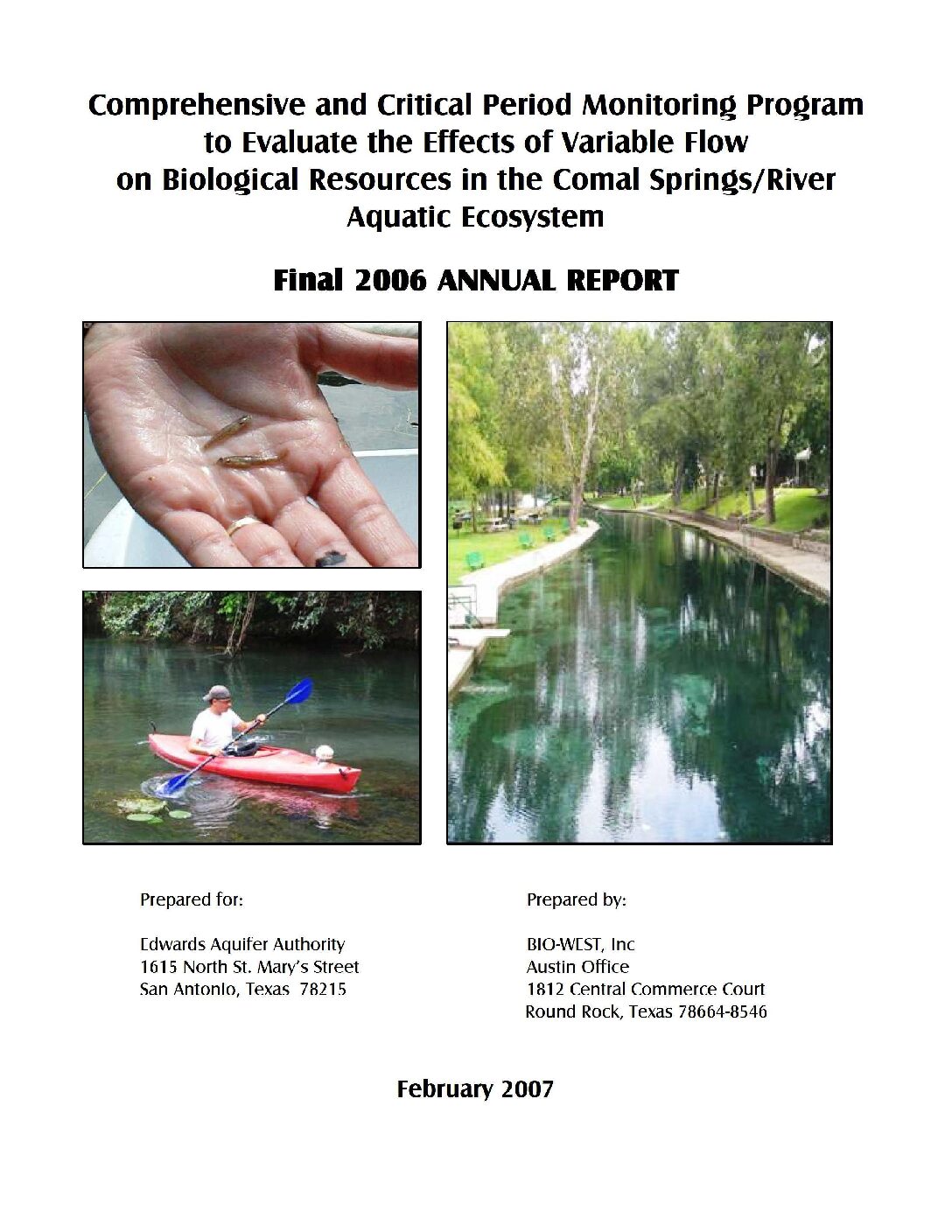
Description: Annual report for 2006 on biota study of Comal Springs/River
Location: Comal Springs/River
Summary:The purpose of this report is to document the results of all aquatic ecosystem monitoring conducted in 2006 at Comal Springs located in New Braunfels, Texas. The monitoring and report preparation was performed by BIO-WEST, Inc. Pflugerville, Texas.
[Excerpted from the Executive Summary]
Although discharge was considerably lower in 2006 than previous years, no Critical Period sampling events were triggered for this system. The lack of significant precipitation in 2006 caused the aquifer to drop to levels not observed in recent years.
Aquatic vegetation in the four sample reaches was mapped twice in 2006 to better understand discharge to vegetation growth relationships, and the relationship between fountain darter (Etheostoma fonticola) populations and their habitat. Overall, growth in vegetation was variable among the sites during 2006.
Size-class distributions of fountain darters in reaches furthest removed from spring influence demonstrated that larger fountain darters were more abundant in fall, and smaller darters were more numerous in spring indicating a spring reproductive peak. In the reaches closer to spring influence, a second peak of small darters was also seen in fall indicating that year-round reproduction does occur in certain areas. Last year, an effort was made to establish a rapid method for assessing changes in fountain darter population abundance between sample efforts, especially during Critical Periods (high- and low-flow events). This dip-netting protocol was continued in 2006 at all four sites. In 2006, darters were found in 70% of dips across all vegetation types in the spring, and 60% in the fall.
[N]o live specimens [of giant ramshorn snails] were collected during 2006 sampling efforts. However, since these snails can have severe impacts at high densities, their populations will continue to be monitored and remain a key focus during critical low-flow periods.
All SCUBA/snorkel surveys revealed the presence of Comal Springs salamanders along the lake bottom and in each sampled Spring Run in 2006. Though lower than average discharge was present in 2006, salamander populations remained consistent in the spring runs.
A total of 144 hours of sample time occurred among the three drift net sites at Comal Springs in 2006 and 11 species were captured. Population changes of species in 2006 were similar to previous years. Species of the genus Stygobromus and Lirceolus continued to be most abundant at all sites. Stygobromus pecki (Peck's cave amphipod) was the dominant amphipod
Initial observations of the gill parasite Heterophyid cercariae show that the Elizabeth Street site (Old Channel) has the highest abundance in the water column compared to the other two sites. In addition, concentrations of the parasite appeared to increase as discharge decreased. Since the intensive parasite evaluation began in 2006, there have been a total of thirteen rounds of parasite sampling, and an additional fifteen rounds will be completed before the study is completed in June 2007.
Overall, the most concerning observation in the Comal Springs / River ecosystem is that the Old Channel Reach is not nearly as productive as it had been during the early years of this study.
Ecology of the Exotic Giant Rams-Horn Snail, Marisa cornuarietis, Other Biological Characteristics and a Species/Ecological Review of the Literature of the Comal Springs Ecosystem of South Central Texas
Description: Literature research on endangered species of the Edwards Aquifer, and field and laboratory studies on the giant rams-horn snail (Marisa cornuarietis)
Location: Comal Springs
Summary:Phase 1 is an ecological literature review and annotated bibliography of Fountain Darter (Etheostoma fontlcola), San Marcos Salamander (Eurycea nana), Comal Springs riffle beetle (Heterelmls comalensis), Peck's cave amphlpod (Stygobromus pecki), Comal Springs dryopld beetle (Stygoparnus comalensis), Giant rams-horn snail (Marisa cornuarietis).
Phase II is descriptive and manipulative field studies to determine the impact of the giant rams-horn snail (Marisa cornuarietis) on the Comal Springs aquatic ecosystem, and also laboratory feeding experiments.


 CURRENT