
 Aquifer Conditions
Science & Data Document Library
Science and Data Resources
Comprehensive and Critical Period Monitoring Program to Evaluate the Effects of Variable Flow on Biological Resources in the San Marcos Springs/River Aquatic Ecosystem Final 2004 Annual Report

Description: Annual report for 2004 on biota study of San Marcos Springs/River
Location: San Marcos Springs/River
Summary:The purpose of this report is to document the results of all aquatic ecosystem monitoring conducted in 2004 at San Marcos Springs located in San Marcos, Texas. The monitoring and report preparation was performed by BIO-WEST, Inc. Pflugerville, Texas.
[Excerpted from the Executive Summary]
Because above-average flow conditions occurred during most of 2000-2004, there were no low-flow Critical Period events, but three high-flow Critical Period events in the San Marcos Springs/River ecosystem during that time. Overall water quality was assessed quarterly throughout the entire San Marcos River and in Spring Lake during 2000-2002 using standard parameters (water temperature, dissolved oxygen, pH, and conductivity) as well as conventional water chemistry parameters (nitrate, total nitrogen, ammonia, soluble reactive phosphorus, total phosphorus, alkalinity, and total suspended solids). This assessment suggested that all water quality parameters had relatively narrow ranges that were providing high quality conditions for aquatic life use.
Flooding resulted in a temporary reduction in total aquatic vegetation coverage in all reaches, but affected the IH-35 Reach most dramatically and the City Park Reach the least. However, many plant types quickly responded to the scouring flows with rapid re-growth and expanded to a total coverage that exceeded the pre-flooding condition. The plant type that was most susceptible to scour during flooding in the San Marcos Springs/River ecosystem was Cabomba, which occurs in areas of deep silt. It was also the highest quality habitat type (of those sampled quantitatively) for fountain darters in the San Marcos Springs/River ecosystem.
There was a substantial increase in total coverage of Texas wild-rice throughout the San Marcos River in 2000-2004. There are fewer abundant vegetation types in the San Marcos Springs/River ecosystem than in the Comal Springs/River ecosystem and the densities of fountain darters observed in the various vegetation types did not range as widely. The results show a relatively consistent estimate of the fountain darter population during 2000-2004 with some decrease associated with each high-flow event. These results revealed that discharge has had limited influence on fountain darter densities with the discharge that has occurred in 2000-2004. However, the limited data from low-flow conditions did not allow an extensive statistical assessment of fountain darter population dynamics. In general, the number of fountain darters per net in the San Marcos River was much lower than in the Comal River.
In addition to evaluating fountain darter population dynamics, the entire fish community was assessed by calculating species diversity in each sample reach during each sample effort in 2000-2004. There was no difference in diversity between the two reaches and no discernable patterns of change in diversity at the reach level during 2000-2004. One additional area of concern to fountain darters, the density of giant ramshorn snails (Marisa cornuarietis) was monitored in 2000-2004. By all indications the densities of giant ramshorn snails observed in the San Marcos Springs/River ecosystem during the study period to pose no serious threat to the aquatic vegetative community (i.e., fountain darter habitat). However, because of the impact that this exotic species can have under heavier densities, close monitoring of this species should continue. The gill parasite that has been reported to infect the fountain darter in the Comal Springs/River ecosystem was not visually evident in fountain darters collected from the San Marcos Springs/River ecosystem during 2000-2004.
Observations of the San Marcos salamander have varied in number within and between locations during 2000-2004, but individuals have been observed in each sample location during each sample period. Filamentous algae was abundant in most sampling events conducted during 2000-2004 in the sample site adjacent to the former Aquarena Springs Hotel and the deep site in Spring Lake and required clearing the algae prior to sampling efforts. This may have impacted sampling efficiency. Regardless, the Hotel site consistently had the highest number of San Marcos salamanders.
More data from low-flow periods (particularly from an extended low-flow period) are essential to fully evaluate the biological risks associated with future critical periods (high or low flow). This study remains the most comprehensive biological evaluation that has ever been conducted on the San Marcos Springs/River ecosystem.
Comprehensive and Critical Period Monitoring Program to Evaluate the Effects of Variable Flow on Biological Resources in the Comal Springs/River Aquatic Ecosystem Final 2004 Annual Report
Description: Annual report for 2004 on biota study of Comal Springs/River
Location: Comal Springs/River
Summary:The purpose of this report is to document the results of all aquatic ecosystem monitoring conducted in 2004 at Comal Springs located in New Braunfels, Texas. The monitoring and report preparation was performed by BIO-WEST, Inc. Pflugerville, Texas.
[Excerpted from the Executive Summary]
Because above-average flow conditions occurred during most of 2000-2004, there were only two low-flow Critical Period events, but four high-flow Critical Period events in the Comal Springs/River ecosystem during that time.
Overall water quality was assessed quarterly throughout the entire Comal River during 2000-2002 using standard parameters (water temperature, dissolved oxygen, pH, and conductivity) as well as conventional water chemistry parameters (nitrate, total nitrogen, ammonia, soluble reactive phosphorus, total phosphorus, alkalinity, and total suspended solids). This assessment suggested that all water quality parameters had relatively narrow ranges that were providing high quality conditions for aquatic life use.
For the fountain darter, habitat use is largely influenced by aquatic vegetation and assessments of habitat availability were conducted by mapping this vegetation during each sampling event. Throughout the study, aquatic vegetation remained abundant in most reaches despite the frequent scouring associated with flooding. The most highly affected plant types tended to be the vegetation types that support the highest densities of fountain darter. These results indicate the strong influence of bryophytes on the total population of fountain darters in the Comal Springs/River ecosystem.
Drop net data also provided information on the overall size-class distribution for the Comal Springs/River ecosystem, which continues to indicate a healthy fish assemblage. In addition, species diversity was calculated for the entire fish community in each reach during each sample effort in 2000-2004. Though there were some differences in natural diversity among reaches, there were no discernable patterns of change in diversity at the reach level during 2000-2004.
By all indications the density of giant ramshorn snails observed in the Comal ecosystem during the study period to date (including the 2000 low-flow events) pose no serious threat to the aquatic vegetative community (i.e., fountain darter habitat). However, because of the impact that this exotic species can have under heavier densities, close monitoring of this species should continue.
Gill parasites varied substantially in abundance among sample sites during this study, but variation among seasons was less pronounced.[M]ore studies are needed to evaluate the relationships between snails and abundance of parasites.
Observations of Comal Springs salamander have varied in number within and between locations during 2000-2004, but individuals have been observed in each sample location during each sample period. There was no distinct pattern of variation in salamander abundance with changes in discharge; however, there was a trend of increasing numbers of salamanders surveyed in the eastern outfall adjacent Spring Island in 2003 and 2004.
[T]here was a distinct influence of high-flows on the 2004 samples. However, despite the differences in springflow conditions relative to 2003, many of the findings in 2004 were very similar to those in 2003.
The new sample method for Comal Springs riffle beetles, adopted in 2004, provided a larger sample size which improved the ability to evaluate potential differences in population abundance among sites, seasons and with different depths and flows. Previous sampling indicated that there were differences in population size among the three sample areas, but there were similar numbers of Comal Springs riffle beetles (adults and larvae) observed in all sites in 2004. There were also data to suggest that the species has precise requirements (e.g., physical characteristics or food source) that govern its distribution.
This study remains the most comprehensive biological evaluation that has ever been conducted on the Comal River ecosystem.
Comprehensive and Critical Period Monitoring Program to Evaluate the Effects of Variable Flow on Biological Resources in the San Marcos Springs/River Aquatic Ecosystem Final 2001 Annual Report Appendix C: Drop Net Raw Data
Description: Raw drop-net data for the 2001 Annual report on biota study of San Marcos Springs/River
Location: San Marcos Springs/River
Summary:This Appendix is a compilation of quarterly raw drop-net data for the 2001 San Marcos Springs/River critical periods study in San Marcos, Texas. Data collection points were at City Park and I-35. The monitoring and report preparation was performed by BIO-WEST, Inc. Pflugerville, Texas.
Comprehensive and Critical Period Monitoring Program to Evaluate the Effects of Variable Flow on Biological Resources in the Comal Springs/River Aquatic Ecosystem Final 2005 Annual Report
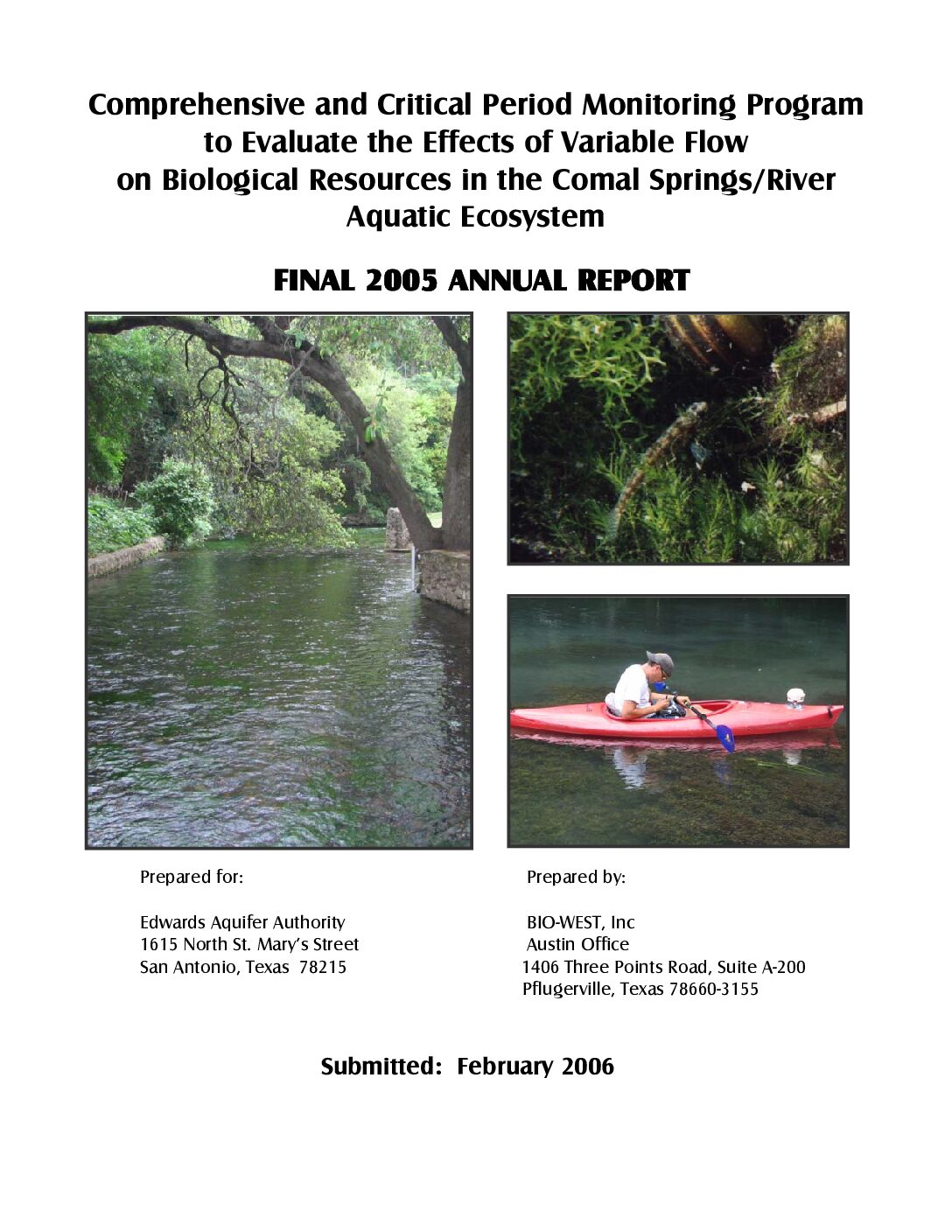
Description: Annual report for 2005 on biota study of Comal Springs/River
Location: Comal Springs/River
Summary:The purpose of this report is to document the results of all aquatic ecosystem monitoring conducted in 2005 at Comal Springs located in New Braunfels, Texas. The monitoring and report preparation was performed by BIO-WEST, Inc. Pflugerville, Texas.
[Excerpted from the Executive Summary]
There were no low-flow critical periods or high-flow events triggered in 2005. Flows were consistently higher than that of the average historical record for the entire year in the Comal River. [W]e have not been able to acquire the necessary range of data from all flow levels (specifically low-flow) to conduct stringent data reduction techniques or statistical applications.
Overall, vegetation coverage increased at all sites following the high-flows of 2004. In most cases, flooding resulted in a temporary reduction in total aquatic vegetation coverage, but many plant types quickly responded with rapid re-growth and expanded to a total coverage that exceeded the preflooding condition.
Overall, the size-class distribution for fountain darters collected during the study period is typical of a healthy fish population with a peak near 30 millimeters (mm) total length (TL). In 2005, an effort was made to establish a rapid method for assessing changes in fountain darter population abundance between sample efforts, especially during critical periods (high- and low-flow events).
Although not a fish, one exotic species which has had considerable impact on the vegetation community in the Comal Springs/River ecosystem in the past is the giant ramshorn snail (Marisa cornuarietis). Densities of these organisms have declined in recent years, and were at their lowest in 2005. However, since these snails can have severe impacts at high densities, their populations will continue to be monitored especially if a critical low-flow period occurs in 2006. In 2005, new methods were tested to help better identify changes in gill parasite drift densities during the year. These new methods will be implemented in 2006 to better understand drift rates of the parasite and infection rates of fountain darters.
All SCUBA/snorkel surveys revealed the presence of Comal Springs salamanders (Eurycea sp.) along the Landa Lake bottom and in each sampled Spring Run, except for the Spring Run at Spring Island in fall 2005.
Among species of concern, an average of 14.5 Stygobromus pecki (Peck's cave amphipod, many small Stygobromus were unidentifiable to species), 3.2 Heterelmis comalensis (Comal Springs riffle beetle), and 1.3 Stygoparnus comalensis (Comal Springs dryopid beetle) were retrieved during each 24-hour period at all sites. S. pecki was found in all three locations.
A total of 1,009 Comal Springs riffle beetles were collected in all 2005 samples and the number of larvae (n=227) was far fewer than the number of adults (n=782). The sampling methodology used in 2004-2005 has revealed a much larger population of Comal Springs riffle beetle along the western shoreline of Landa Lake than previous sampling had suggested.These data suggest that the species has precise requirements (e.g., physical characteristics or food source) that govern its distribution.
Though the comprehensive portion of the study has been reduced to two annual samples (plus a limited summer effort), it is still adequate to maintain a continuous record of conditions. That is vital knowledge since antecedent conditions influence community-level response to reduced discharge conditions. Sampling only during a low-flow event will not provide the necessary context to adequately assess changes that occur during such conditions.
Comprehensive and Critical Period Monitoring Program to Evaluate the Effects of Variable Flow on Biological Resources in the Comal Springs/River Aquatic Ecosystem Final 2002 Annual Report
Description: Annual report for 2002 on biota study of Comal Springs/River
Location: Comal Springs/River
Summary:The purpose of this report is to document the results of all aquatic ecosystem monitoring conducted in 2002 at Comal Springs located in New Braunfels, Texas. The monitoring and report preparation was performed by BIO-WEST, Inc. Pflugerville, Texas.
[Excerpted from the Executive Summary]
As in 2001, there were no low-flow critical periods triggered in 2002; however, a high-flow event occurred during the summer (24-hour mean discharge reached levels that have occurred less than 0.1% of the time in the recorded hydrograph). This sample event replaced the summer quarterly sample and a previously unscheduled fall quarterly sample was conducted as a result.
Aquatic vegetation has remained abundant throughout the study period (2000-present) and has provided suitable habitat for biological communities. In the Old Channel Reach, filamentous algae was nearly completely scoured in 2002 as it was by the flood in fall 2001. This is significant because of the importance of this vegetation type to fountain darters (Etheostoma fonticola).[A]fter the summer 2002 flood, fountain darter densities were low relative to the previous sampling event.As in the San Marcos River ecosystem, flooding has had significant short-term impacts on fountain darter habitat and the vegetation types with the greatest suitability were the most susceptible (filamentous algae and bryophytes). Two additional parameters were noted during fountain darter sampling, the density of giant ramshorn snails (Marisa cornuarietis) and evidence of gill parasites on fountain darters.
Drift net sampling for benthic macroinvertebrates was completed with the spring quarterly sample. In the spring runs and at the springs' orifices, suitable habitat for the federally endangered invertebrates was observed throughout the study period. Suitable habitat for the Comal Springs salamander (Eurycea sp.) was noted in the spring runs and Spring Island area; Comal Springs salamanders were observed in each area during each sampling event.
More data from lowflow periods (particularly from an extended low-flow period) are essential to fully evaluate the biological risks associated with future critical periods (high or low flow).This study remains the most comprehensive biological evaluation that has ever been conducted on the Comal River ecosystem.
Comprehensive and Critical Period Monitoring Program to Evaluate the Effects of Variable Flow on Biological Resources in the Comal Springs/River Aquatic Ecosystem Final 2001 Annual Report
Description: Annual report for 2001 on biota study of Comal Springs/River
Location: Comal Springs/River
Summary:The purpose of this report is to document the results of all aquatic ecosystem monitoring conducted in 2001 at Comal Springs located in New Braunfels, Texas. The monitoring and report preparation was performed by BIO-WEST, Inc. Pflugerville, Texas.
[Excerpted from the Executive Summary]
During 2001 the conditions in the Comal ecosystem were representative of a normal-to-wet winter and spring followed by the typical summertime decline. However, unlike summer 2000, a significant rainfall event occurred in late summer (September 2001) and moderate-to-high rainfall conditions occurred throughout the remainder of the fall, including another major event in November 2001. As a result, no critical period samples were triggered by low-flow events in 2001; yet two sampling events were conducted following the periods of intense flooding in which the 24-hour mean discharge in the Comal River reached levels that have occurred less than 0.5% of the time in the recorded hydrograph. In each case sampling was conducted after the ecosystem had returned to normative conditions in order to evaluate the postflooding effects, but not so soon that sampling would be influenced by immediate, ephemeral impacts occurring during the elevated flow conditions.
Throughout this time period the Comal ecosystem can be characterized as an ecosystem with very high water quality for the chemical and physical variables that were measured. Aquatic vegetation remained abundant throughout the study period and provided suitable habitat for biological communities. Fountain darters were collected from each reach sampled reach during each sampling event. The overall size class distribution for the Comal ecosystem represents that of a healthy fish assemblage
By all indications the densities of giant ramshorn snails (Marisa cornuarietis) observed in the Comal ecosystem during the study period to date (including the 2000 low-flow events) pose no serious threat to the aquatic vegetative community. However, because of the impact that this exotic species can have under heavier densities, close monitoring of this species should continue. The gill parasite that has been reported for the fountain darter was evident in a number of collected fountain darters.
Within the spring runs and at the springs' orifices, suitable habitat for the listed invertebrates was observed throughout the study period. Several Comal Springs riffle beetle (Heterelmis comalensis) adults and larvae were collected in the drift nets throughout the year. A major discovery in 2001concerning invertebrates was the extension of the known range for the Comal Springs riffle beetle.
Suitable habitat for the Comal Springs salamander (Eurycea sp.) was noted in the spring runs and Spring Island area with Comal Springs salamanders observed in each area for each sampling event.
One conclusion that can be made is that this study is the most comprehensive biological evaluation that has ever been conducted on the Comal ecosystem.
Comprehensive and Critical Period Monitoring Program to Evaluate the Effects of Variable Flow on Biological Resources in the San Marcos Springs/River Aquatic Ecosystem Final 2011 Annual Report
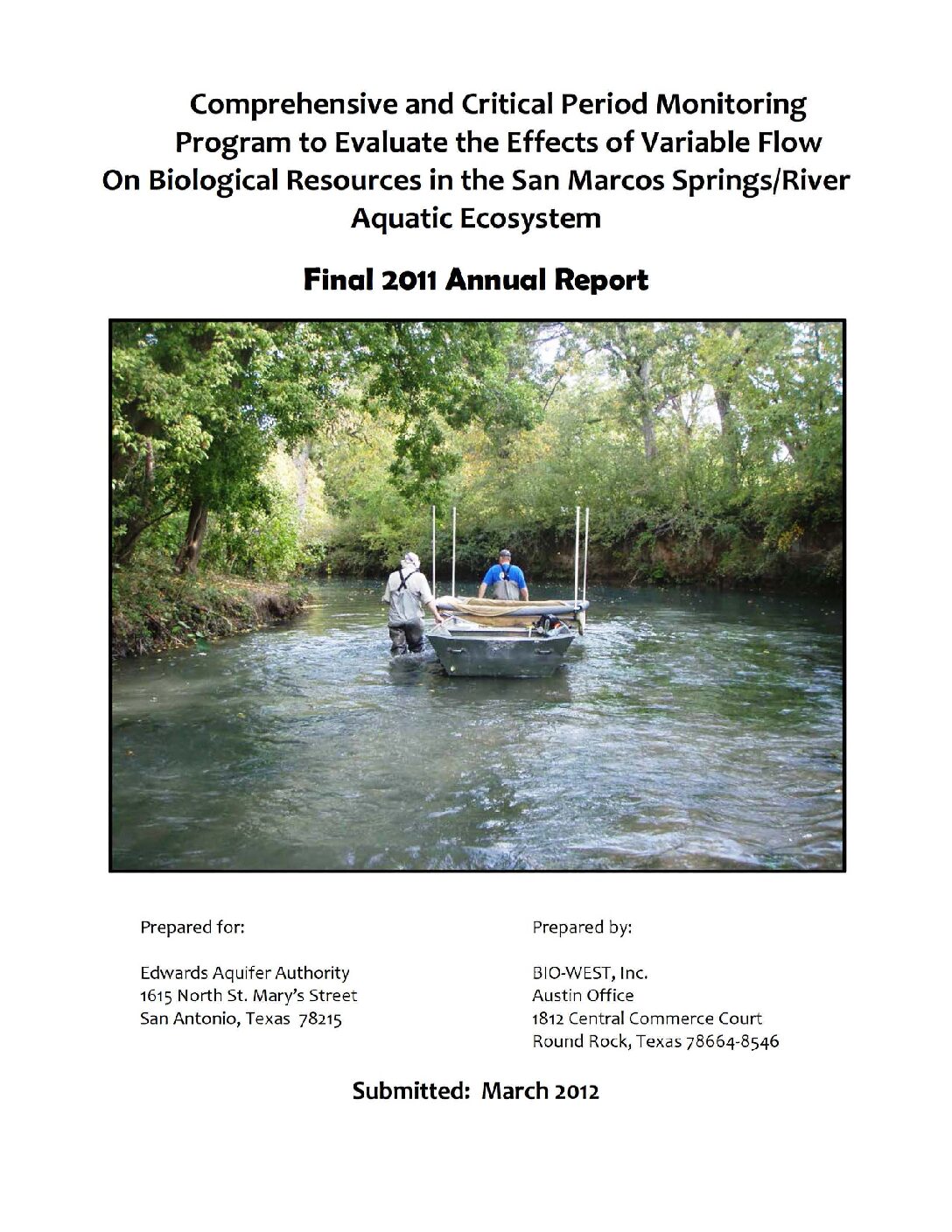
Description: Annual report for 2011 on biota study of San Marcos Springs/River
Location: San Marcos Springs/River
Summary:The purpose of this report is to document the results of all aquatic ecosystem monitoring conducted in 2011 at San Marcos Springs located in San Marcos, Texas. The monitoring and report preparation was performed by BIO-WEST, Inc. Pflugerville, Texas.
[Excerpted from the Executive Summary]
Flows in the San Marcos River in 2011 were similar to previous low flow years (2006, 2009), and similar effects were observed. A decrease in Texas wild-rice coverage and fountain darter population estimates reflected the impact of increased recreation pressure under low flow conditions. However, San Marcos salamander densities remained high despite the lower than average flow conditions. Since salamander habitat is limited to areas near spring upwellings at the head of the system (much of which is under Spring Lake and thus protected from recreation), habitat quality for these animals is influenced less by low-flow conditions and increased recreation pressure. Ongoing changes in spring discharge, recreation pressure, exotic species, and other factors make continued monitoring of this system critical to inform management decisions.
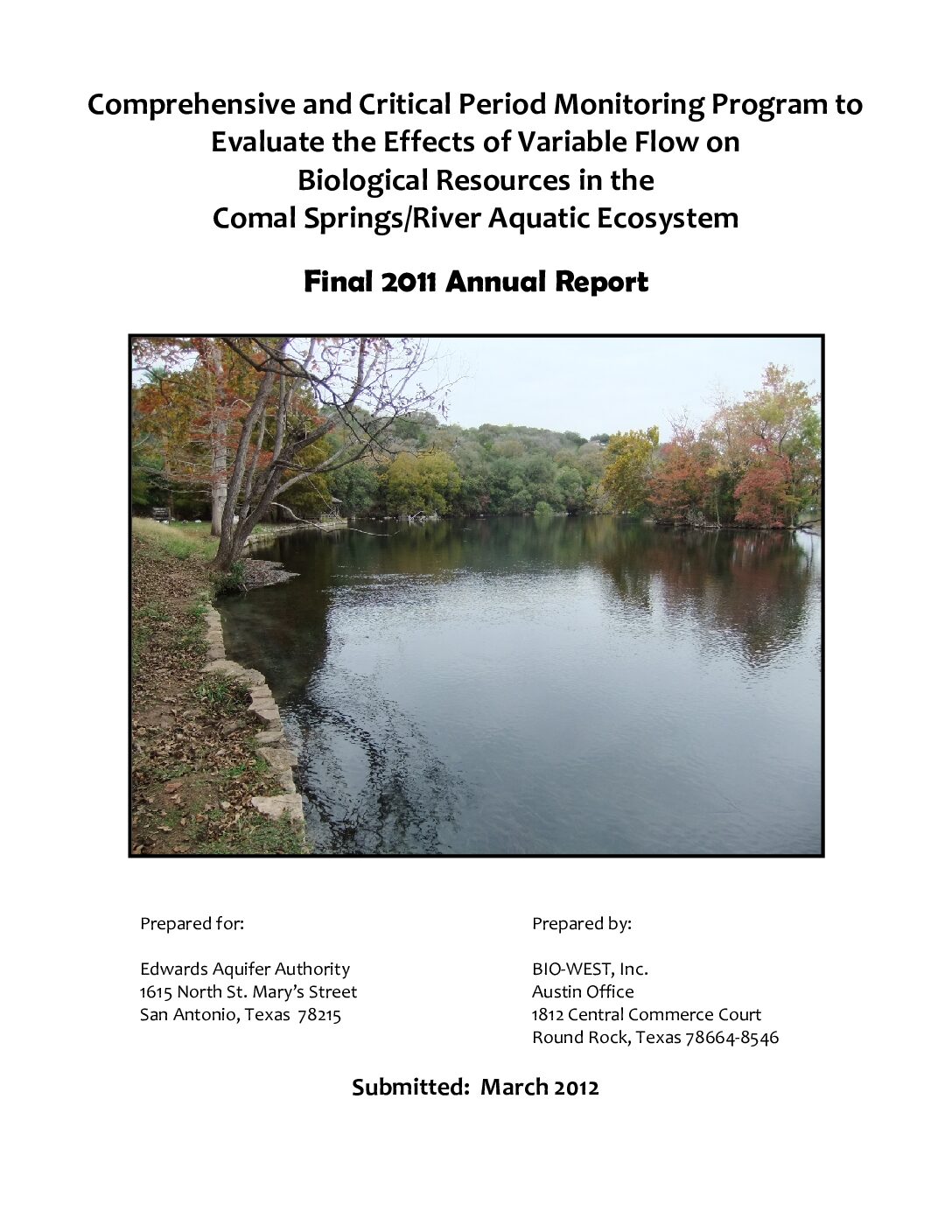
Comprehensive and Critical Period Monitoring Program to Evaluate the Effects of Variable Flow on Biological Resources in the Comal Springs/River Aquatic Ecosystem Final 2011 Annual Report
Description: Annual report for 2011 on biota study of Comal Springs/River
Location: Comal Springs/River
Summary:The purpose of this report is to document the results of all aquatic ecosystem monitoring conducted in 2011 at Comal Springs located in New Braunfels, Texas. The monitoring and report preparation was performed by BIO-WEST, Inc. Pflugerville, Texas.
[Excerpted from Executive Summary]
Following the major flood event in June 2010, the Comal River (and much of Central Texas) plunged into one of the worst droughts in history. As summer air temperatures increased and precipitation was sparse, flows continued to drop in the Comal River. These back to back events provided a unique opportunity to assess the aquatic community, evaluate stressors and compare observations to previous lower than average years. The 2011 Variable Flow study data indicated continued deleterious effects in the Upper Spring Run Reach on both aquatic vegetation and fountain darter populations as full recovery from the 2010 major flood event had not been accomplished in this reach prior to the extended period of drought.
Less severe, but negative effects on aquatic vegetation and fountain darter populations were evident in Landa Lake during the majority of 2011. Aquatic vegetation and fountain darter conditions within the Old Channel remained consistent with post-culvert reconstruction conditions, while New Channel conditions improved during 2011.
Neither water quality parameters measured (including water temperature) throughout the Comal Springs/River ecosystem, nor endangered macroinvertebrate habitat or population data posed concern during the extended drought witnessed in 2011. As such, the juxtaposition of high and low-flow events in 2010 and 2011 caused impacts (some severe) in the certain reaches of the ecosystem, but overall the aquatic communities presently remain intact. As the drought continues, or is broken it will be invaluable to continue to monitor the response and/or recovery of the Comal Springs/River ecosystem.
Variable Flow Study Seven Years of Monitoring and Applied Research
Description: Summary of the Comprehensive and Critical Period Monitoring Program to Evaluate the Effects of Variable Flow on Biological Resources in the Comal and San Marcos Springs Ecosystems Aquatic for 2000-2007
Location: Comal Springs/River, San Marcos Springs/River
Summary:This report presents a summary of the monitoring and research efforts that have occurred in the Comal and San Marcos Ecosystems since 2000. The report provides background on the monitoring components and the evolution of the overall monitoring program along with results or trends that have been documented during the seven years of observations and research. The report also highlights special research projects or case studies that have been conducted to address issues that were not readily apparent and are important for the protection of the species or habitats. Finally, the report provides recommendations of activities or programs to gather missing information regarding the thresholds of the species and habits and management implications of existing activities that merit further discussion.
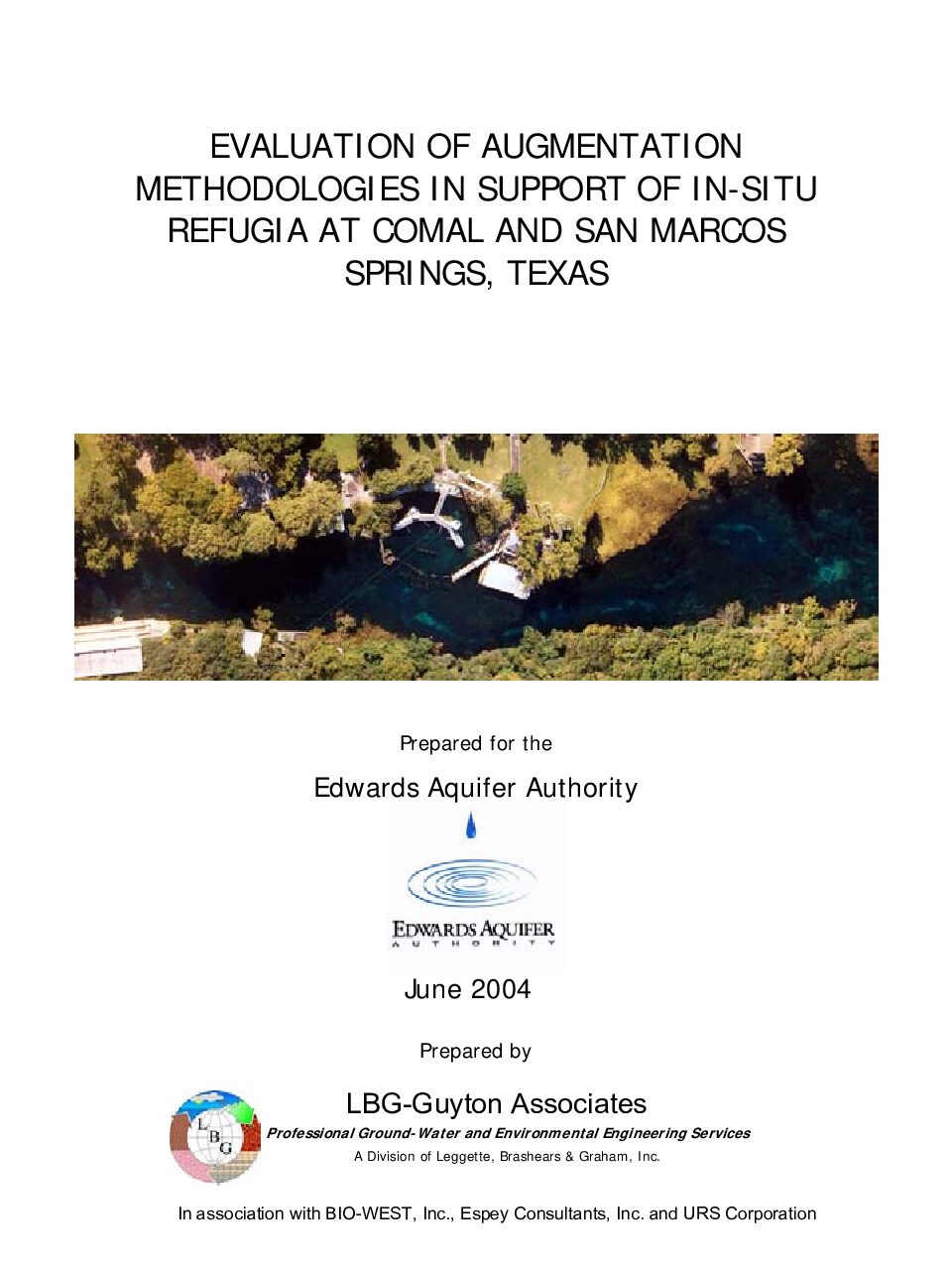
Evaluation of Augmentation Methodologies in Support of In-Situ Refugia at Comal and San Marcos Springs, Texas
Description: Evaluation of different augmentation methodologies to maintain habitats in Comal and San Marcos Springs during drought conditions
Location: Comal Springs, San Marcos Springs
Summary:The study was performed to investigate the feasibility of augmenting flow at Comal and San Marcos springs. Augmenting springflow was evaluated for the purpose of maintaining critical habitat for threatened and endangered species for a very limited period of time during drought conditions. The study was completed in June 2004 by a team led by LBG-Guyton Associates.
[From the Introduction]
The objective of this study was to investigate updated options that would complement the objectives of the regional pumpage reduction programs. In essence, the results of this project would maintain viable habitat long enough for the rains to return. To accomplish this goal augmentation strategies would need to be custom designed for each spring. This required a more detailed evaluation of:
- The hydrogeology of the Comal Springs and San Marcos Springs areas, including a better understanding of how the springs and associated lakes changed under different flow regimes
- The distribution of the endangered species in the springs and lakes
- The different strategies that either added water to the springs to help prevent rapid decreases of flow over time or focused the available flow to the most critical areas so as to maintain suitable conditions.
This document addresses three areas:
1. The hydrogeology and hydrology of Comal and San Marcos Springs,
2. The location of the highest quality habitat in the spring complexes, and,
3. The use of additional waters to supplement the natural flows at the springs.
This report does not offer a single final answer, but does prioritize recommendations as to how the Authority might proceed toward a possible solution.
Water Quality/Variable Flow Study Summary of Fall Quarterly Sampling San Marcos River, San Marcos, Texas October 24-November 2, 2000

Description: Sampling activities methodologies, sample locations, and raw data for critical period monitoring in the San Marcos River October 24-November 2, 2000
Location: San Marcos River
Summary:This Annual Summary Report serves only to highlight the sampling activities that were conducted with respect to the Fall Quarterly Sampling (Comprehensive Monitoring Effort) on the San Marcos River. The report presents the sampling activities, brief summary of methodologies, sample locations, and raw data. The report also serves to satisfy the requirements of the Federal Fish and Wildlife Permit # TE820022-2 .
The data reduction and analysis component of the project will be presented in the final report to be issued to the Edwards Aquifer Authority in February 2003. The PBS&J project team conducted the Fall Quarterly Sampling from 24 October to 2 November 2000 with the flows at San Marcos reporting 117 cfs on 27 October 2000, and 151 cfs on 2 November 2000.
Although the San Marcos River never reached the 100 cfs trigger level for critical period monitoring, it came very close. The 120 cfs trigger level was reached initiating specific Texas wild-rice observations. A critical period trip was initiated on 5 October when the flows had declined to 106 cfs. Dip netting activities were conducted on 5 October 2000. Several inches of rain fell over the weekend pushing the flows back up to approximately 114 cfs, thus cancelling the critical period trip. After that time, the flows at San Marcos stayed fairly stable until the completion of the Fall Quarterly Event. On the final day of sampling another round of heavy rainfall boosted the levels in the aquifer and thus increased the flows in the San Marcos system. However, the Fall Quarterly Event was conducted prior to this rainfall and represented fairly low-flow conditions.
Water quality was measured for the system during this effort with all parameters measured being suitable for the biological communities. Aquatic vegetation was abundant and provided suitable habitat for biological communities. Within the two reaches sampled for fountain darters via the drop net methodology, suitable habitat for the darter was observed. Drop net sampling in both reaches produced fountain darters within the suitable aquatic vegetation types. In addition, dip net sampling was conducted in the Spring Lake Reach, City Park Reach, and I-35 Reach. Using dip nets, fountain darters were collected from all reaches. Suitable habitat for the San Marcos salamander was also noted in the four specific salamander sampling areas with salamanders observed in each area.
During the September and October Texas wild-rice efforts, floating mats of vegetation were evident in certain reaches. These mats of vegetation were subsequently flushed out by the heavy rainfalls that occurred post-sampling. The gill parasite that has been reported for the fountain darter in the Comal system was not visually evident in fountain darters collected from the San Marcos River.
As noted for the Comal system, the San Marcos Fall Quarterly Sampling provided a strong confirmation that the study design appears well suited to address the concerns of variable flow and water quality on the biological resources in the San Marcos system. It must continue to be emphasized that additional sampling in variable flow conditions to compare back to this fall quarterly sampling effort and future efforts remains critically important in order to best define and understand the system.
Water Quality/Variable Flow Study Summary of Fall Quarterly Sampling Comal River, New Braunfels, Texas November 9-17, 2000

Description: Sampling activities methodologies, sample locations, and raw data for critical period monitoring on the Comal River, New Braunfels, Texas September 7-15, 2000
Location: Comal River/Springs Ecosystem
Summary:This Annual Summary Report serves only to highlight the sampling activities that were conducted with respect to the Fall Quarterly Sampling (Comprehensive Monitoring Effort) on the Comal Springs I River ecosystem. The report presents the sampling activities, brief summary of methodologies, sample locations, and raw data. The report also serves to satisfy the requirements of the Federal Fish and Wildlife Permit # TE820022-2. The data reduction and analysis component of the project will be presented in the final report to be issued to the Edwards Aquifer Authority in February 2003.
The PBS&J project team conducted the Fall Quarterly Sampling from 9 November to 17 November 2000 with the flows at Comal reporting 314 cfs on 9 November 2000, and 344 cfs on 17 November 2000.
From the time of the Critical Period Monitoring efforts, a considerable amount of rainfall had accumulated and the aquifer experienced a considerable rise. The flows reported during this fall quarterly event were approximately twice those reported during the critical period events. Again, all three major springs (Spring runs 1, 2, and 3) were flowing. Water quality was also measured for the system during this period with the standard parameters (including temperature) being suitable for the biological communities. Aquatic vegetation was abundant and provided suitable habitat for biological communities.
Within the four reaches sampled for fountain darters via the drop net methodology, suitable habitat for the darter was observed. Drop net sampling in all reaches produced fountain darters within the suitable aquatic vegetation types, sometimes in large numbers as documented in Landa Lake. Although a few darters were collected in the drop nets from the Upper Spring Run Reach during the Fall Quarterly sampling, follow-up dip net sampling for fountain darters in this reach was less productive than during the critical period events. In addition, dip net sampling was conducted in Landa Lake and the Old Channel.
Using dip nets, fountain darters were collected from all reaches with large numbers being reported in the suitable habitat in Landa Lake and the Old Channel. Within the spring runs and at the springs' orifices, suitable habitat for the listed invertebrates was observed. Drift net samples were taken in Spring runs 1, 2, and 3. Suitable habitat for the Comal Springs salamander was also noted in the spring runs and Spring Island area with salamanders observed in each area.
Unlike the first two events, the filamentous algae and floating mats of vegetation that had been present was thoroughly removed prior to the fall quarterly sampling. The gill parasite that has been reported for the fountain darter over the last several years was also very evident in a number of fountain darters collected. The fountain darters collected from the Old Channel Reach exhibited the worst conditions noted with respect to parasite infections and darter condition.
The fall quarterly effort conducted at approximately twice the Critical Period flow provided an excellent confirmation that the study design appears well suited to address the concerns of variable flow and water quality on the biological resources in the Comal system. It must continue to be emphasized that additional sampling in variable flow conditions to compare back to this fall quarterly sampling effort and future efforts remains critically important in order to best define and understand the system.
Water Quality/Variable Flow Study Summary of Critical Period Sampling #2 Comal River, New Braunfels, Texas September 7-15, 2000

Description: Sampling activities methodologies, sample locations, and raw data for critical period monitoring on the Comal River, New Braunfels, Texas September 7-15, 2000
Location: Comal River / Springs Ecosystem
Summary:This Annual Summary Report serves only to highlight the sampling activities that were conducted with respect to the Second Critical Period Monitoring Effort on the Comal Springs I River ecosystem. The report presents the sampling activities, brief summary of methodologies, sample locations, and raw data. The report also serves to satisfy the requirements of the Federal Fish and Wildlife Permit # TE820022-2. The data reduction and analysis component of the project will be presented in the final report to be issued to the Edwards Aquifer Authority in February 2003.
The PBS&J project team conducted the second Critical Period Monitoring Sampling from 7 September to I 5 September 2000 with the flows at Comal reporting 145 cfs on 7 September 2000, and 171 cfs on 15 September 2000.Separated by less than two weeks, the observations noted for the second Critical Period Monitoring effort were very similar to the observations of the first Critical Period Monitoring effort. At the flows present (145- 17I cfs) during the second Critical Period Monitoring effort, all three major springs (Spring runs 1, 2, and 3) were flowing. Water quality was also measured for the system during this period with the standard parameters (including temperature) being suitable for the biological communities. Aquatic vegetation was abundant and provided suitable habitat for biological communities. Within the four reaches sampled for fountain darters via the drop net methodology, suitable habitat for the darter was observed. Drop net sampling in the lower three reaches produced fountain darters within the suitable aquatic vegetation types, sometimes in large numbers as documented in Landa Lake and the Old Channel.
No fountain darters were collected in drop nets from the Upper Spring Run Reach. However, subsequent dip net sampling in the Upper Spring Run Reach for fountain darters revealed that darters still occupied the reach. In addition, dip net sampling was conducted in Landa Lake, the New Channel, the Old Channel, and below Garden Street just above the confluence with the Guadalupe River. Using dip nets, fountain darters were collected from all reaches with large numbers being reported in the suitable habitat in Landa Lake and the Old Channel. Within the spring runs and at the springs' orifices, suitable habitat for the listed invertebrates was observed. Drift net samples were taken in Spring runs 1, 2, and 3. Suitable habitat for the Comal Springs salamander was also noted in the spring runs and Spring Island area with salamanders observed in each area.
As during the first effort, there was a considerable amount of filamentous green algae in the Upper Spring Run Reach, covering the majority of the substrate and the aquatic vegetation to varying degrees. This condition was much less evident in the lower reaches. The gill parasite that has been reported for the fountain darter over the last several years was also very evident in a number of fountain darters collected.
The fountain darters collected from the Old Channel Reach exhibited the worst conditions noted with respect to parasite infections and darter condition. It should be emphasized that the parasite has been repeatedly noted for darters in the Comal System and that the Old Channel maintained some of the highest flows sampled during this effort.
The second effort again confirmed that the study design appears well suited to address the concerns of variable flow and water quality on the biological resources in the Comal system. It also must be reemphasized that sampling in variable flow conditions to compare back to this critical period sampling effort and future efforts remains critically important in order to best define and understand the system.
Recharge to and Discharge from the Edwards Aquifer in the San Antonio Area, Texas, 1998
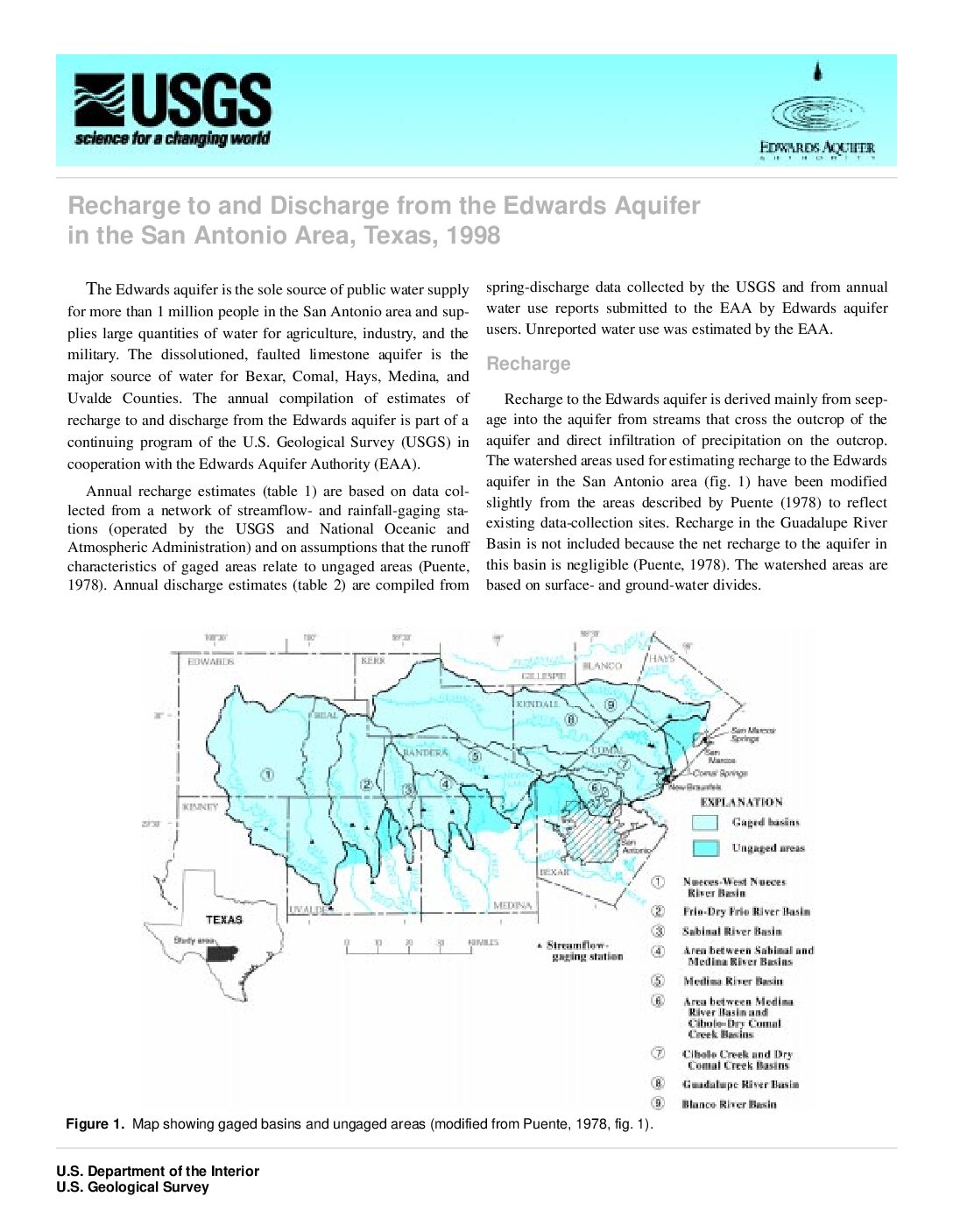
Description: Short report summarizing recharge and discharge to and from the Edwards Aquifer from 1934-1998
Report Number: http://tx.usgs.gov/reports/dist/dist-1999-01/
Location: Edwards Aquifer Balcones Fault Zone San Antonio Region
Summary:The estimated annual recharge for 1998 is 1,142,300 acre-feet (acre-ft). The estimated annual recharge for 1934“98 (table 1) ranges from 43,700 acre-ft in 1956 to 2,486,000 acre-ft in 1992. The average and median estimated annual recharge for 1934“98 are 683,100 and 556,100 acre-ft, respectively. The estimated annual discharge from wells and springs during 1998 is 915,900 acre-ft.
The estimated annual discharge from wells and springs for 1934“98 (table 2) ranges from 388,800 acre-ft in 1955 to 1,130,000 acre-ft in 1992. The 1934“98 estimated annual discharge from wells ranges from 101,900 acre-ft in 1934 to 542,400 acre-ft in 1989.
Discharge from San Marcos and Comal Springs (371,100 acre-ft) accounted for about 80 percent of spring discharge during 1998. The remaining spring discharge was from Hueco Springs in Comal County, San Pedro and San Antonio Springs in
Bexar County, and Leona Springs in Uvalde County. Discharge from Leona Springs includes underflow from the Edwards aquifer into gravels of the Leona Formation along the stream. The 1934“98 estimated annual discharge from springs ranged from 69,800 acre-ft in 1956 to 802,800 acre-ft in 1992; the average for the period is 365,300 acre-ft and the median is 375,500 acre-ft.
Records of Ground-Water Recharge and Discharge for the Edwards Aquifer in the San Antonio Area, Texas, 1934-77
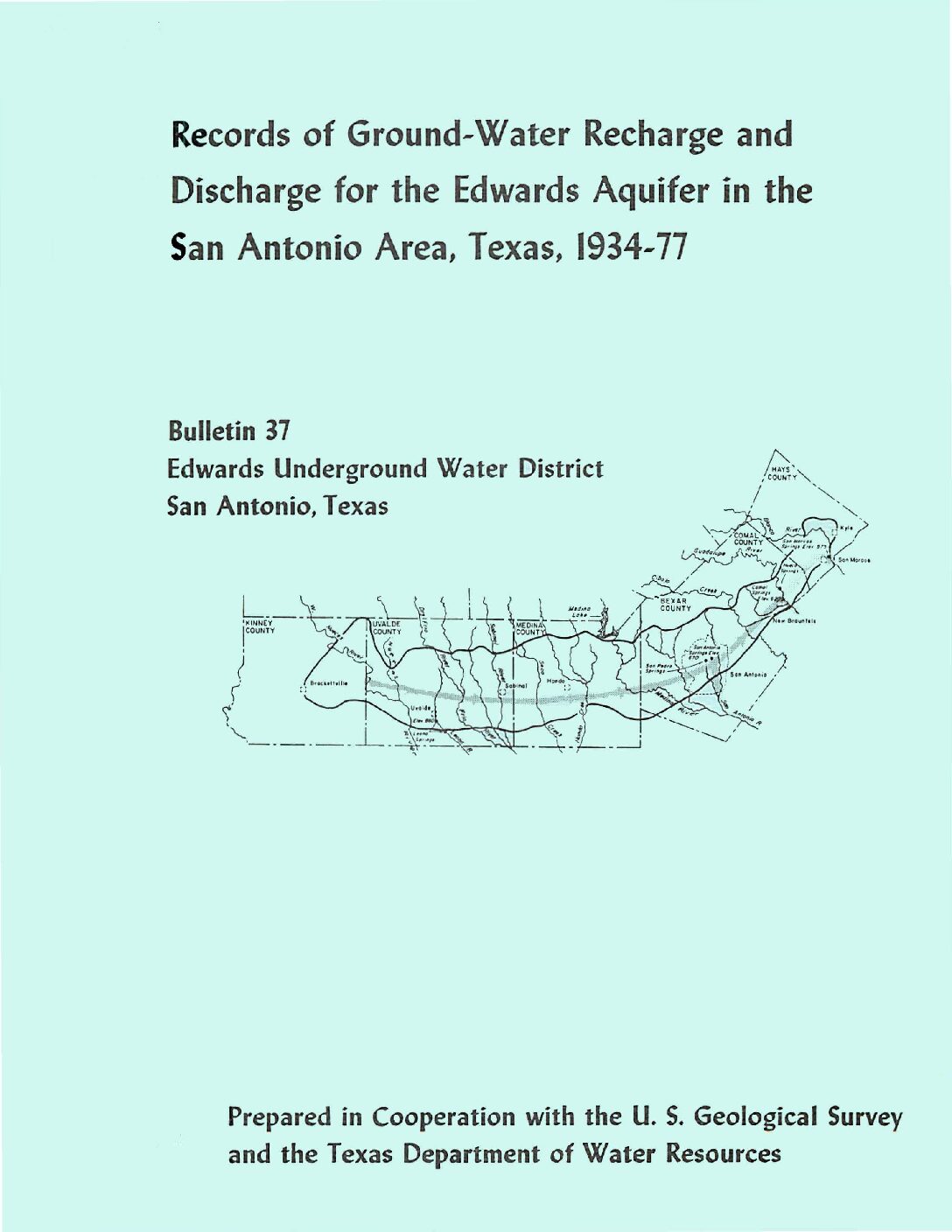
Description: Annual report for 1977 on recharge and discharge from the Edwards Aquifer issued by the Edwards Underground Water District
Report Number: Bulletin 37
Location: Edwards Aquifer Balcones Fault Zone San Antonio Segment
Summary:The average annual ground-water recharge to the Edwards aquifer in the San Antonio area, Texas, from 1934 through 1977 was about 589,200 acre-feet. A maximum annual recharge of 1,711,200 acre-feet occurred in 1958, and a minimum annual recharge of 43,700 acre-feet occurred in 1956.
A maximum annual discharge of 960,900 acre-feet occurred in 1977, and a minimum annual discharge of 388,800 acre-feet occurred in 1955. The maximum annual discharge by wells was 406,800 acre-feet in 1971.


 CURRENT