
 Aquifer Conditions
Science & Data Document Library
Science and Data Resources
Technical Assessments in Support of the Edwards Aquifer Science Committee J Charge: Flow Regime Evaluation for the Comal and San Marcos River Systems

Description: Modeling for critical flow requirements to protect endangered species in the Comal and San Marcos Rivers
Location: Comal River, San Marcos River
Summary:This report summarizes the technical analysis of the flow dependent characteristics of physical habitat for target aquatic species within the Comal and San Marcos Rivers to support the Science Committee of the Edwards Aquifer Recovery Implementation Program in development of their recommendations for flow regimes under Senate Bill 2 J Charges'. Target species were fountain darter (Etheostoma fonticola), Texas wild rice (Zizania texana), and the Comal Springs riffle beetle (Heterelmis comalensis). In addition, qualitative assessments of other native and non-native species as well as recreation were considered.
A team of private, state, federal, and university researchers knowledgeable with the target species and in particular, the Comal and San Marcos River systems were used to develop influence diagrams for the three target species to aid the evaluation of both intrinsic and extrinsic factors that affect the persistence of these target species. The team also used these diagrams to evaluate existing data and specific modeling approaches to aid in their evaluations of flow regimes for each river system. As part of this process, the team considered other factors such as non-native species of plants and animals, parasites, recreation, and anthropogenic impacts due to watershed development.
Historical research and existing physical, chemical, and biological monitoring data collected through 2009 from both the Comal and San Marcos Rivers were integrated to develop biological response functions for factors such as depth, velocity, substrate/vegetation use, water temperatures, etc. Habitat suitability curves were reviewed for fountain darters, Texas wild rice, and Comal Springs riffle beetles based on new data collected over the past eight years. Existing monitoring data were used to update the fountain darter habitat suitability curves for depth and velocity. No modifications were made to the Texas wild rice habitat suitability curves and as noted below, simulations of available habitat for the Comal Springs riffle beetle relied on a simplified surface area analysis as well as an alternative analysis based on data collected during the original Comal River studies. Vegetation maps relied upon those derived from the original studies conducted in the Comal and San Marcos due to lack of system-wide revised vegetation mapping data being available. These existing or revised habitat suitability curves for the target species, in conjunction with the two-dimensional hydrodynamic models for each river and associated one-dimensional water quality/temperature models for the Comal and San Marcos Rivers were used to predict the location and quality of wild rice, fountain darter, and riffle beetle habitat as a function of different flow ranges in each river system. No new water quality modeling was undertaken and the report relied upon the previous modeling results for both river systems. Model sensitivity to changes in channel topographies and habitat suitability curves for depth and velocity for fountain darters were also explored.
Updated modeling results show that the largest difference in the habitat versus flow relationships for fountain darters were attributed to differences in habitat suitability curves. Modeling of fountain darter habitat for pre versus post 1998 flood induced channel changes in the San Marcos River primarily resulted in a scaling of the magnitude of predicted available habitat rather than a substantive change in the functional relationship. In both the San Marcos and Comal River systems, potentially adverse thermal conditions may begin to limit darter larval survival under very low flow conditions.
Modeling results for Texas wild rice in the San Marcos River suggest that habitat availability begins to decline below about 65 cfs with increasing risk to physical disturbance and drying, especially at and below 30 cfs. The modeling results also suggest that protection of Texas wild rice would likely ensure protection for the other target species such as fountain darters.
Modeling results for the Comal Springs riffle beetle based on total surface area in the main spring runs (i.e, 1,2, and3) were somewhat insensitive to modeled total Comal flow rates as low as 30 cfs. However, maintaining spring run flows provides the most conservative strategy as it provides the best overall protection for the other flow dependent aquatic resources such as fountain darters and other native species.
Based on modeling results and analysis, recommendations are made for future work in light of the on-going data collection and modeling in support of the Edward Aquifer Habitat Conservation Plan.
Although this report provides the technical documentation on modeling approaches and summary results, no specific flow recommendations are made. The Science Committee of the Edwards Aquifer Recovery Implementation Program will recommend target flow regimes for each river system.
Comal Springs Riffle Beetle Laboratory Study Evaluation Under Variable Flow Conditions
Description: Laboratory study of the Comal Springs Riffle beetle under varying horizontal and vertical flow conditions
Report Number: San Marcos National Fish Hatchery & Technology Center Project 802, Task 18
Location: Comal Springs (Laboratory)
Summary:[from the Executive Summary]
BIO-WEST conducted laboratory experiments to evaluate the habitat use of the endangered Comal Springs riffle beetle, Heterelmis comalensis. A paucity of data regarding physiological and ecological needs of the insect limits ones understanding of its habitat and necessitates basic research of the species. This study expanded upon recent field efforts by BIO-WEST, which revealed an
expansion of the known range of the Comal Springs riffle beetle. Previously it had been found primarily in spring runs feeding Landa Lake, New Braunfels, Texas, but individuals have recently been collected in seeps along the shoreline and around upwellings on the bottom of this lake.
Because the Comal Springs riffle beetle is found outside of the spring runs, it may be able to occupy more habitat than previously believed; this may also help explain the persistence of the species during periods of drought, particularly in 1956 when Comal Springs ceased flowing for 5-months. Nevertheless, the tendency of the species to congregate in areas of spring upwelling raises questions about how individuals react to a significant reduction or cessation of flow. It has been suggested that individuals retreat into springheads during such periods of low-flow. Under these conditions, water movement will attenuate and springflow may only be detected in subterranean habitats. It is also possible that a portion of the population regularly occupies interstitial spaces below the uppermost layer of gravel and rock that has been sampled exclusively to date.
To examine this issue, an experimental representation of the natural habitat was designed and the response of the Comal Springs riffle beetle to water flow of varying intensities and with different
combinations of horizontal and vertical flow assessed. Observations were made of depth and orientation toward current under the different treatments applied with these variables. Barriers to restrict vertical movement and flow were added in the later trials. Initial trials were conducted with a surrogate species, Microcylloepus pusillus, to evaluate the design of the enclosures and assess several artificial substrates.
Although results revealed no statistically significant conclusions, the beetles displayed tendencies for movement downward and towards current. All trials with the surrogate and the first two trials with the Comal Springs riffle beetle had similar results; the beetles all congregated on or near the bottom regardless of conditions. To account for a potential oversimplification of the natural habitat
(very large interstitial spaces), barriers were placed between every other layer. The barriers were installed to restrict downward movement and simulate the increasingly small spaces likely to be
encountered below the upper layer of substrate in the wild. The barriers may have also improved lateral flow across layers such that beetles were more able to detect flow direction more readily; more beetles were found in the front of each panel, where flow originated. The results of different barrier/flow intensity/flow direction combinations were for beetles to be found in the higher layers
with horizontal flow only across the top layers, to display a more even vertical distribution when horizontal flow was allowed throughout, and to congregate on the bottom in upwelling-only
treatments.
The tendency of the Comal Springs riffle beetles to orient toward flow confirms field observations that the species associates with flowing water. The overwhelming tendency for the beetles to move downward during the first two trials was hardly conclusive, but trials with highly restrictive barriers (i.e., 1-5% passable) provide evidence to suggest that individuals will search for moving water when it cannot be detected near the surface. With the barriers, upwelling flow would have been severely restricted and likely detected only by individuals once they had moved to the lower levels, yet most beetles were found there. In contrast, trials with only lateral flow across the upper layers had more beetles in those layers; the beetles presumably did not move to lower layers in search of the requisite flow. Finally, a trial with flow decreasing to zero over time and barriers in place resulted in a higher frequency of beetles in the lower layers in the trial with horizontal flow throughout. If these observations translate to behavior in the natural habitat, it is likely that individuals would respond to decreasing flow by retreating into more subterranean habitats. Further, it is possible that individuals may inhabit areas deeper in the gravel and sediment around spring orifices than have been previously sampled.
It is important to note that these results may be affected by a number of factors that remain unknown about the species and were unaccounted for in this experiment. Dietary needs, reproductive behavior, etc., also may have influenced movement. In the natural habitat, niche division (intra- or interspecific competition) and predator avoidance may also largely determine habitat selection. Very little is known about this insect and more research is necessary to discern how it would behave under different flow conditions in its natural habitat.
Exploring Drought in the San Antonio Area Between 1700 and 1979
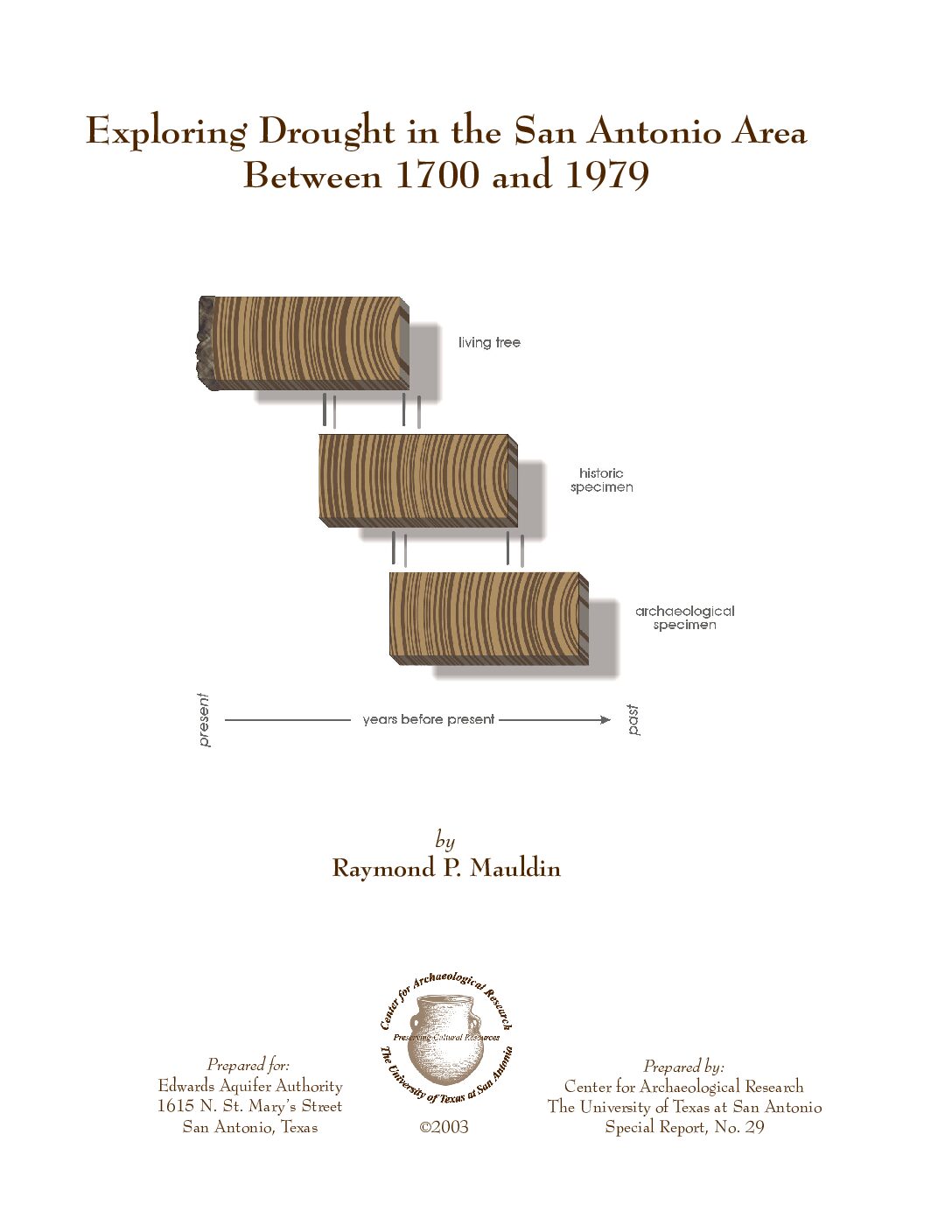
Description: Using tree rings to analyze droughts for the San Antonio area between 1700 and 1979
Report Number: Special Report No. 29
Location: San Antonio Area
Summary:Relying on tree-ring derived estimates of the summer Palmer Drought Severity Index (PDSI) presented by Cook et al. (1999), this document investigates drought frequency, intensity, and duration in the San Antonio area for a 280-year period between A.D. 1700 and 1979. The PDSI is a widely used index that is based on several variables and is designed to monitor soil moisture conditions. In most circumstances, the PDSI varies between 4.0 and -4.0, with an average year falling between 0.5 and -0.5. Here, I define drought as a value of -1.0 or less on the tree-ring derived PDSI. Using this definition, there were 40 droughts reflected in this 280-year stretch, with the average drought lasting 1.8 years. Long-term droughts, defined as droughts exceeding three years in duration, occurred four times in the available data, with three of these four being in the 1700s, and the fourth occurring in the early 1950s. This 1950s drought, covering a six-year period, was both the longest drought reflected in the available records as well as the most intensive of the four long-term droughts.
Optimization Technical Studies in Support of the Edwards Aquifer Optimization Program
Description: Summary of proposed optimization studies for the EAA. Note: Is outdated. Has been replaced by more recent modeling studies and water plans.
Location: Edwards Aquifer, Comal Springs, San Marcos Springs
Summary:Summary of proposed optimization studies for the EAA. Note: Is outdated. Has been replaced by more recent modeling studies and water plans.
Trans-Texas Water Program West Central Study Area Phase II Guadalupe-San Antonio River Basin Environmental Criteria Refinement
Description: Modeling, summary of biological studies, and sensitivity analyses to support refinement of environmental criteria for the Trans-Texas Water Program West Central Study Area Phase II Guadalupe-San Antonio River Basin Note: This report is included for its possible historical value but has been replaced by the Texas Water Plan.
Location: Guadalupe-San Antonio River Basin
Summary:- Development and application of water quality models of the Guadalupe and San Antonio Rivers focusing on simulation of dissolved oxygen subject to various effluent loading and streamflow conditions (Section 2);
- Summary and interpretation of pertinent biological studies potentially providing insight into the selection of minimum instream flows (Section 3); and
- Performance of sensitivity analyses illustrating the effects of Zone 2 and 3 triggers and minimum flows on water availability, firm yield with off-channel storage, project cost, instream flows, and freshwater inflows to the Guadalupe Estuary (Section 4)
Note: This report is included for its possible historical value but has been replaced by the Texas Water Plan.
2002_BIOWEST_ComalRiffleBeetle
Well Sampling for Aquifer Biota
Description: Sampling plan for studying subterranean species of the Edwards Aquifer Balcones Fault Zone San Antonio Segment
Location: Edwards Aquifer, Balcones Fault Zone, San Antonio Segment
Summary:The Well Sampling for Aquifer Biota Monitoring Plan was prepared for the Edwards Aquifer Authority by the Edwards Aquifer Research and Data Center at Texas State University and George Veni and Associates in 2001. The monitoring plan addresses the need for new, expanded data and information regarding the subterranean aquifer-dwelling organisms of the San Antonio portion of the Balcones Fault Zone Edwards Aquifer by describing locations and methods for collecting aquifer-dwelling biota similar to the previous sampling in 1979.
[From the Introduction]
The Well Sampling of Aquifer Biota Study (the Study) is one of 17 studies identified in the EAOP [Edwards Aquifer Optimization Program]. It was formulated to address the need for more expanded and updated information regarding subterranean aquifer-dwelling organisms. Thirty-seven species of these organisms have been collected from the portion of the aquifer regulated by the Authority. Thirty-three species are invertebrates, such as amphipods, snails, and flatworms. The amphipods and snails are the most diverse groups of all species collected to date. The invertebrates are widely distributed throughout the aquifer. Four species of subterranean vertebrates have been collected. They include two fish species and two salamander species. They exhibit a much more limited distribution than do the invertebrates. Subsequently, both fish species, the widemouth blindcat (Satan eurystomus) and the toothless blindcat (Trogloglanis pattersonf) are listed as threatened by the Texas Parks and Wildlife Department. The United States Fish and Wildlife Service lists one salamander species, the Texas blind salamander (Eurycea rathbuni), as endangered. No subterranean invertebrate species are listed.
The subterranean aquifer-dwelling organisms have generated substantial interest in the scientific community because of their unique biology, distribution patterns, phylogenetic relationships, and evolutionary history. Limited information about their abundance, distribution, population trends, and other life history information has been developed.
Dr. Glenn Longley, his research associates, and graduate students performed the last comprehensive survey of these organisms in 1979. New information about these organisms will support better-informed decisions regarding aquifer management.
In November 2000, the Authority entered into a contract with Southwest Texas State University (SWTSU) through its Edwards Aquifer Research and Data Center (EARDC).
The contract stipulates that EARDC shall develop a comprehensive Monitoring Plan (the Plan) for sampling locations across the aquifer so as to meet the specific objectives and desires of the Authority, its EAOP, and the HCP. The purpose of this document is to function as the Plan for the Study as funded by the Authority. The Plan provides a simple, concise document that outlines procedures and protocols that will allow researchers to fully implement the Study upon the Authority's review and approval of the Plan. It is understood that, depending upon results and future developments, through time the Plan may be further modified, with approval of the Authority. Modifications may be required to facilitate implementation and completion of the Study and will be documented in required quarterly progress reports and the final report.
Assessment of Instream Flow and Habitat Requirements for Cagle’s Map Turtle (Graptemys caglei)
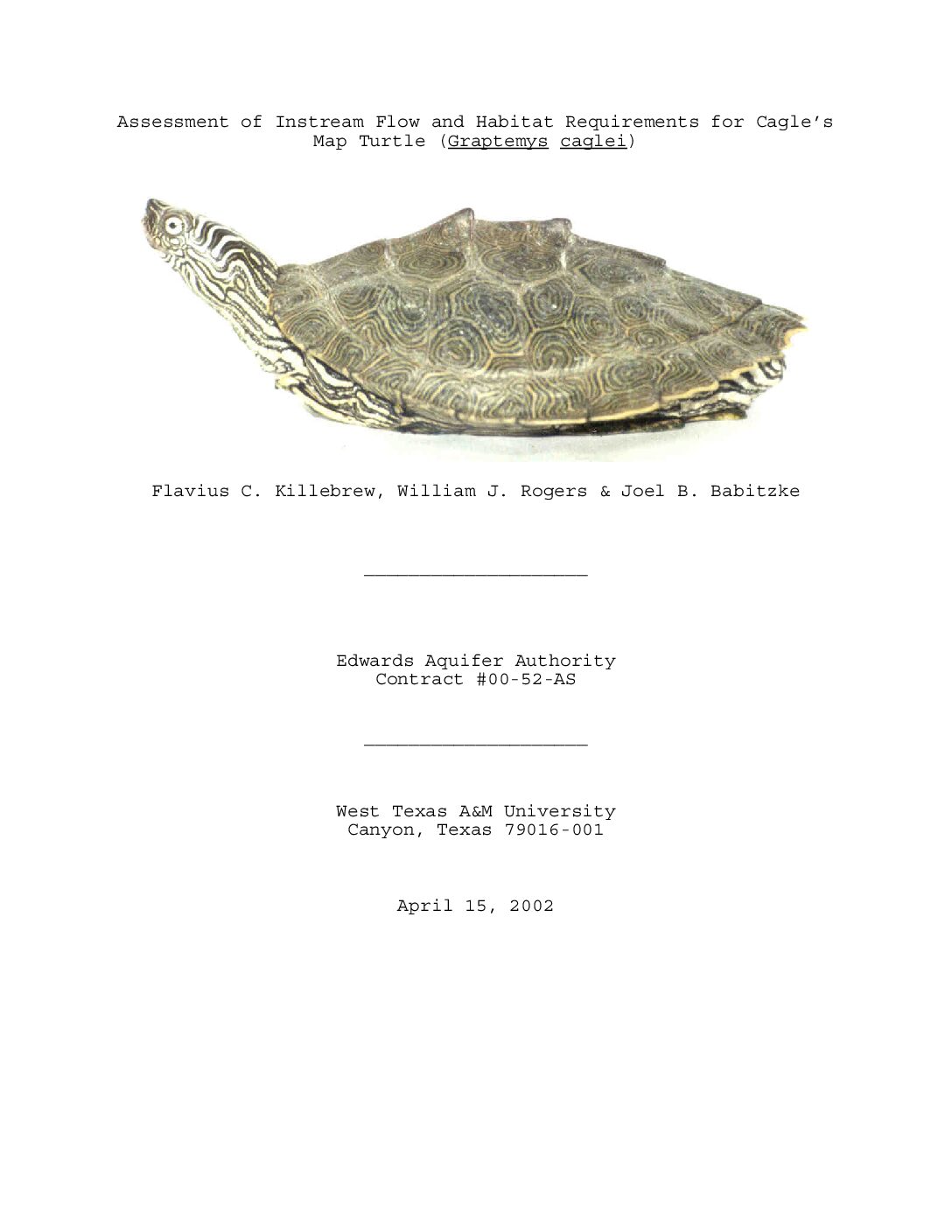
Description: Field study on population and habitat of Cagles Map Turtle and factors affecting them, including instream flow requirements, water quality, and benthics
Location: Guadalupe River
Summary:The purpose of this study was to investigate the instream flow requirements and basic habitat characteristics of the Cagle's Map Turtle in the Guadalupe River system. The study area was from the upper Guadalupe River (near Ingram) to the lower Guadalupe River (near Tivoli ). The turtle's population appears to be steady (declining in one area), based on comparisons of population data from this study with that of other studies. The Cagle's Map Turtle appears to be impacted by physical obstructions in the river more than by varying flow regimes. The study was completed in April 2002 by West Texas A&M University, Canyon, Texas.
[From Introduction]
West Texas A&M University was contracted by the Edwards Aquifer Authority to conduct an assessment of the instream flow and habitat requirements for the Cagle's Map Turtle (Graptemys caglei) in the Guadalupe River. The team was to conduct independent research while working closely with the Project Management Team of the Guadalupe River Instream Flow (GRIF) Study.
The objectives of the study were to:
*Estimate relative abundance of Graptemys caglei.
*Correlate occurrences of Graptemys caglei with detailed physical morphometric maps of stream reaches within the main stream of the Guadalupe River.
*Develop field based habitat association of Graptemys caglei using instream flow methodologies and other techniques.
*Determine instream flow requirements of Graptemys caglei.
*Address water quality parameters and predict attenuation or degradation of water quality in stream segments.
[From Discussion]
Three stream segments were identified that, based on the presence of suitable habitat, lacked predicted populations of Graptemys caglei. In all cases the stream segments lie below either municipal and/or industrial outfalls.
Below Geronimo Creek and the outfall from the City of Sequin a fine precipitate was found on the substrate. Benthic organism density and diversity was reduced in the area. Surber sample results revealed that as the sediments decreased downstream, both benthics and Graptemys caglei populations increased. The traditional water quality parameter list is effective in monitoring nutrient loading and potential for fecal and waste contamination but the list does not address a wide array of inorganic and organic chemicals that could have an effect on the stream ecosystem such as pesticides and herbicides used on lawns and recreational areas.
Additional research is needed to determine why benthic diversity and abundance and Graptemys caglei populations decrease below these areas. Other factors such as disturbance by recreational activities, shooting and periodic habitat disturbance by construction in the streambed and the use of temporary coffer dams should be addressed.
Survey Report on Edwards Underground Reservoir Guadalupe, San Antonio and Nueces Rivers and Tributaries, Texas. Volume 3 Appendix III Geology Appendix V Economic Base Study Appendix VI Recreation and Wildlife
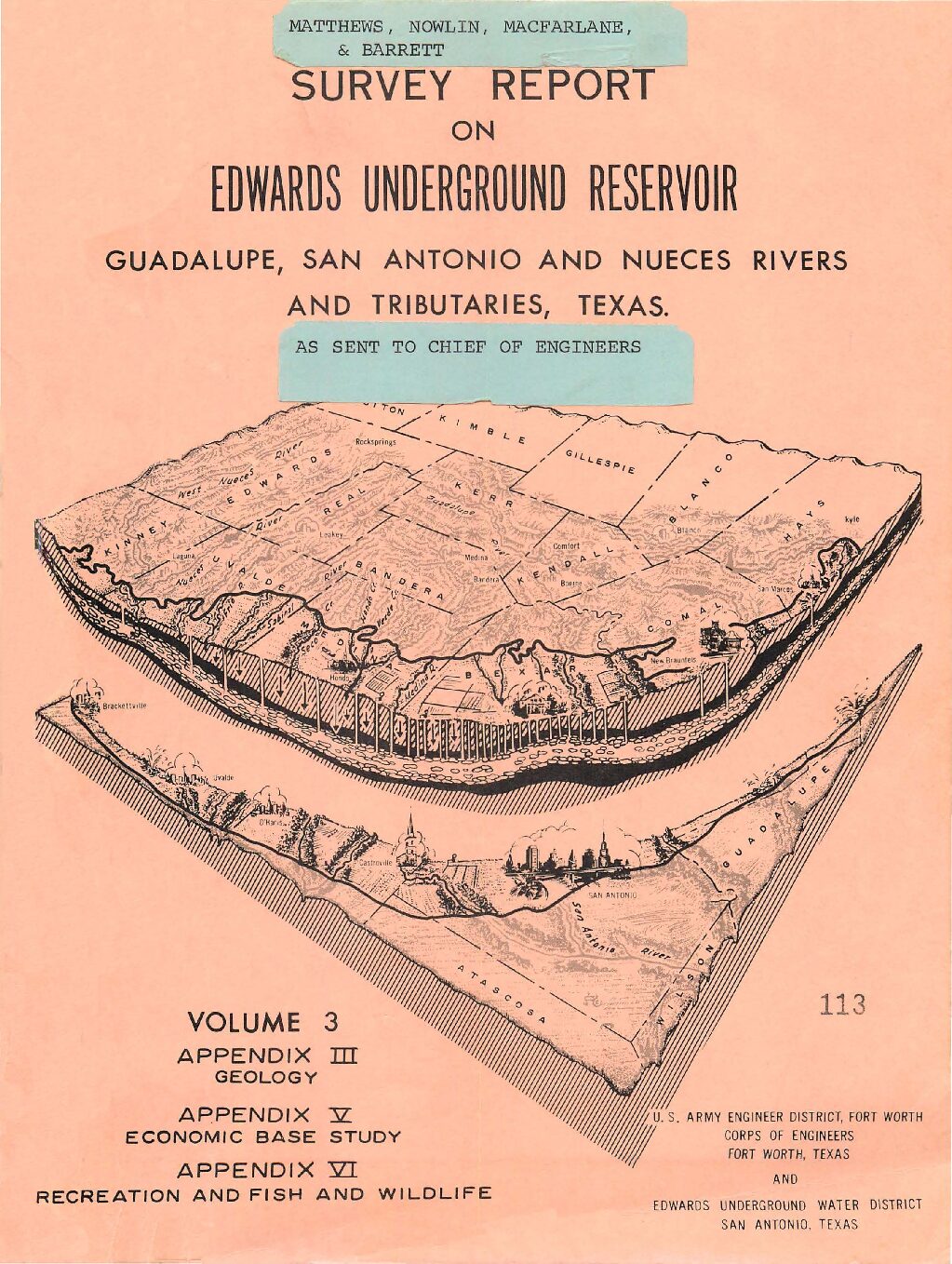
Description: Note: This report is included for its historical value and may have been replaced by more recent studies. Volume 3 (Appendix III Geology Appendix V Economic Base Study Appendix VI Recreation and Wildlife) of survey by the US Army Corps of Engineers and the Edwards Underground Water District, emphasizing possible locations for reservoirs and containment systems.
Location: Edwards Aquifer, Guadalupe River, San Antonio River, Nueces River
Summary:Note: This report is included for its historical value and may have been replaced by more recent studies. Volume 3 (Appendix III Geology Appendix V Economic Base Study Appendix VI Recreation and Wildlife) of survey by the US Army Corps of Engineers and the Edwards Underground Water District, emphasizing possible locations for reservoirs and containment systems.
Final Report for Deep Aquifer Biota Study of the Edwards Aquifer
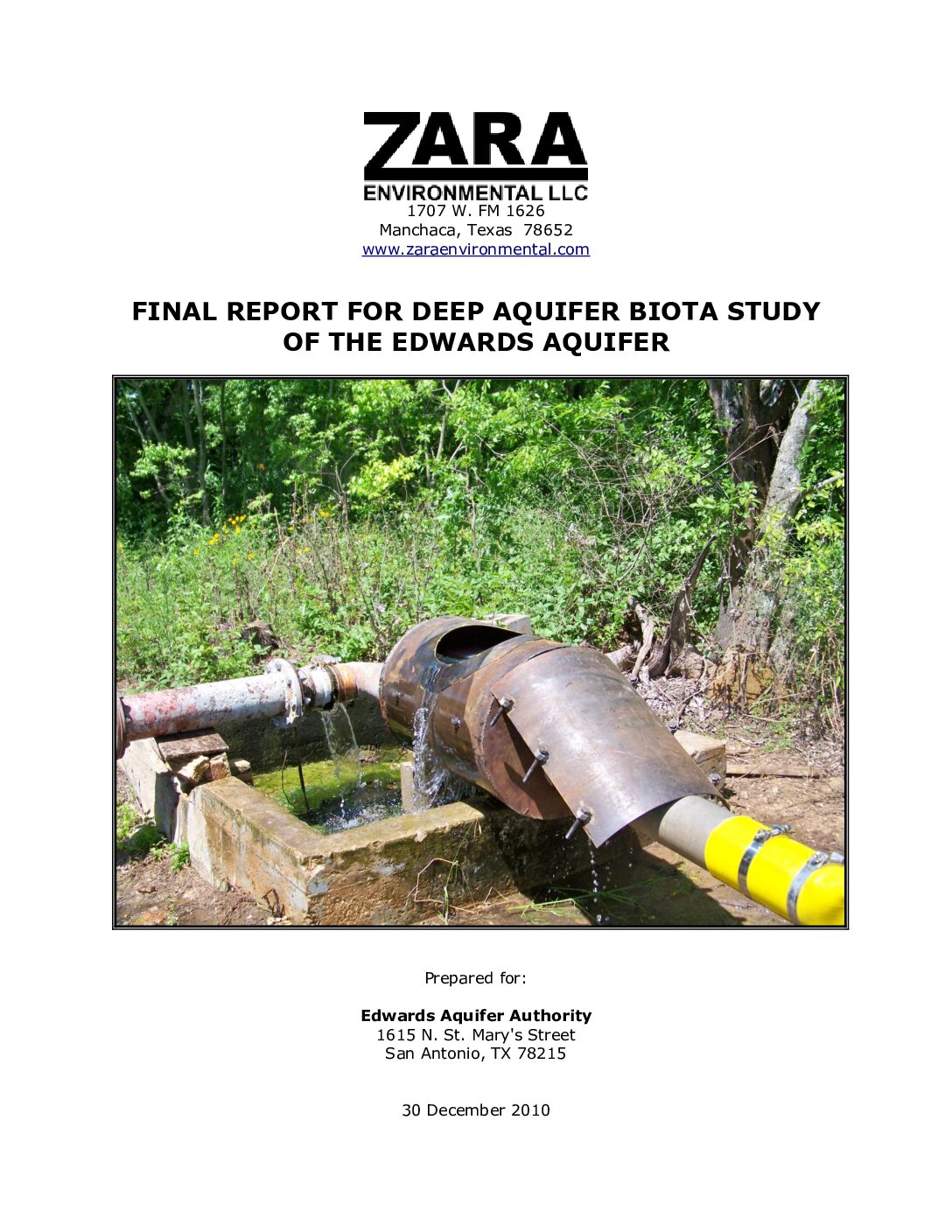
Description: Deep-aquifer biota study in five counties of the Edwards Aquifer
Location: Edwards Aquifer, Balcones Fault Zone, San Antonio Segment, Uvalde County, Medina County, Bexar County, Comal County, Hays County
Summary:The Edwards Aquifer, world renowned for its bio diversity, provides habitat to a variety of subterranean aquatic species ranging from blind salamanders to eyeless catfishes to ghost white shrimp. This report describes the results of a study of aquatic animals that reside in the deep zones of the Edwards Aquifer, primarily near the fresh water/saline water interface. Through cooperation with landowners across five counties, biologists from Zara Environmental Inc., sampled 43 wells between 2008 and 2010 for aquifer organisms.
Highlights of the study include:
- collecting specimens and adding new locality records for both species of blind catfishes, which have not been documented since 1978
- obtaining samples and coordinating with laboratories to gather the first ever genetic analyses of blind catfish
- discovering the first deep aquifer Eurycea salamander from Bexar County and providing that material to geneticists and morphologic taxonomists
- discovering 20 new localities for aquifer crustaceans
- documenting an entire order of fauna (Bathynellacea) previously unknown in the Edwards Aquifer; and
- discovering a species of copepod previously unknown to science, (Diacyclops sp.) from two sites.
In addition, biologists obtained samples that will be used for organic carbon analyses and stable isotope analyses by other researchers. They also developed an in-line sampler design for situations where water delivery from well casing to outlet is in an entirely closed system.
Assessment of Factors Influencing Texas Wild-Rice (Zizania texana) Sexual and Asexual Reproduction
Description: Laboratory and field studies on critical determinants of reproduction in Texas Wild-Rice (Zizania texana)
Location: San Marcos River
Summary:The purpose of this study was to identify factors that influence sexual and asexual reproduction of Texas Wild-rice (Zizania texana). Data collected during the study were used to examine the characteristics of pollen viability and dispersal, stigma viability, ability to self-pollinate, seed production and quality, minimum distances for successful pollination within and among stands, and asexual output. New information regarding pollination success and seed production for Texas Wild-rice was documented. The study was completed in June 2004 by the U.S. Fish and Wildlife San Marcos National Fish Hatchery and Technology Center and the Lady Bird Johnson Wildflower Center.
[Excerpted from the Executive Summary]
The three-year study was designed to identify factors that influence sexual and asexual reproduction in Texas wild-rice (Zizania texana). Four manipulative studies, a field survey, and a compilation of existing seed harvest data (1999 2003) were used to examine the characteristics of pollen viability and dispersal, stigma viability and receptivity, ability to self-pollinate, seed production and quality, minimum distances for successful pollination within and among stands, and asexual output.
The combined information in the chapters of this report creates a description of the reproductive biology of Z. texana. Pollen is released during the relatively cool morning hours (between 0200 and 0400) and is short lived (
It can be inferred that successful pollination would occur in large stands with less than 1 m gaps between stands. Gaps greater than 1 m would limit gene flow between stands. Based on the field survey, few individual Z. texana plants grow in isolation and most plants have other Z. texana as neighbors. This is to be expected in a clonal, wind pollinated species. Results from Chapters 2 and 5, together with TPWD's monitoring of the wild population, suggest that a critical impediment to sexual reproduction occurs at the pollination stage. Fragmentation of stands, gaps between stands, and damaged culms all contribute to failure at the pollination stage. The notable exception to reproductive failure occurs in Sewell Park, where seeds were produced from 1998 to 2004, where the stands are larger and the gaps between stands are smaller relative to the rest of the population.
Updates to the MODFLOW Groundwater Model of the San Antonio Segment of the Edwards Aquifer
Description: MODFLOW groundwater model springflow in the Edwards Aquifer Balcones Fault Zone San Antonio Segment and Barton Springs segment
Location: Edwards Aquifer, Balcones Fault Zone, San Antonio Segment, Barton Springs segment
Summary:This report documents recent updates and recalibration of the MODFLOW groundwater model of the San Antonio segment of the Edwards Aquifer. Conceptual and structural updates include addition of spring outflows and hydrologic flow barriers, removal of explicit conduits, elimination of the Barton Springs segment, new top and bottom layer elevations, and use of explicit well locations to represent pumping. The updated model was calibrated to match observed water levels and spring flows at the end of each month for the period of January 2001 through December 2011. Calibration errors in the updated model met the goals set prior to beginning the update and calibration process. As a validation test, the model was run forward to include years 2012 through 2015, which were not used in the calibration; the model reasonably matched observations for those years, although the overall errors were somewhat greater than for the period it was calibrated to. The model also reasonably matched observations for a drought-of-record simulation of years 1947 through 1958. Uncertainty in recharge is believed to be a significant factor contributing to model error.
The Edwards Underground Reservoir and the Edwards Underground Water District
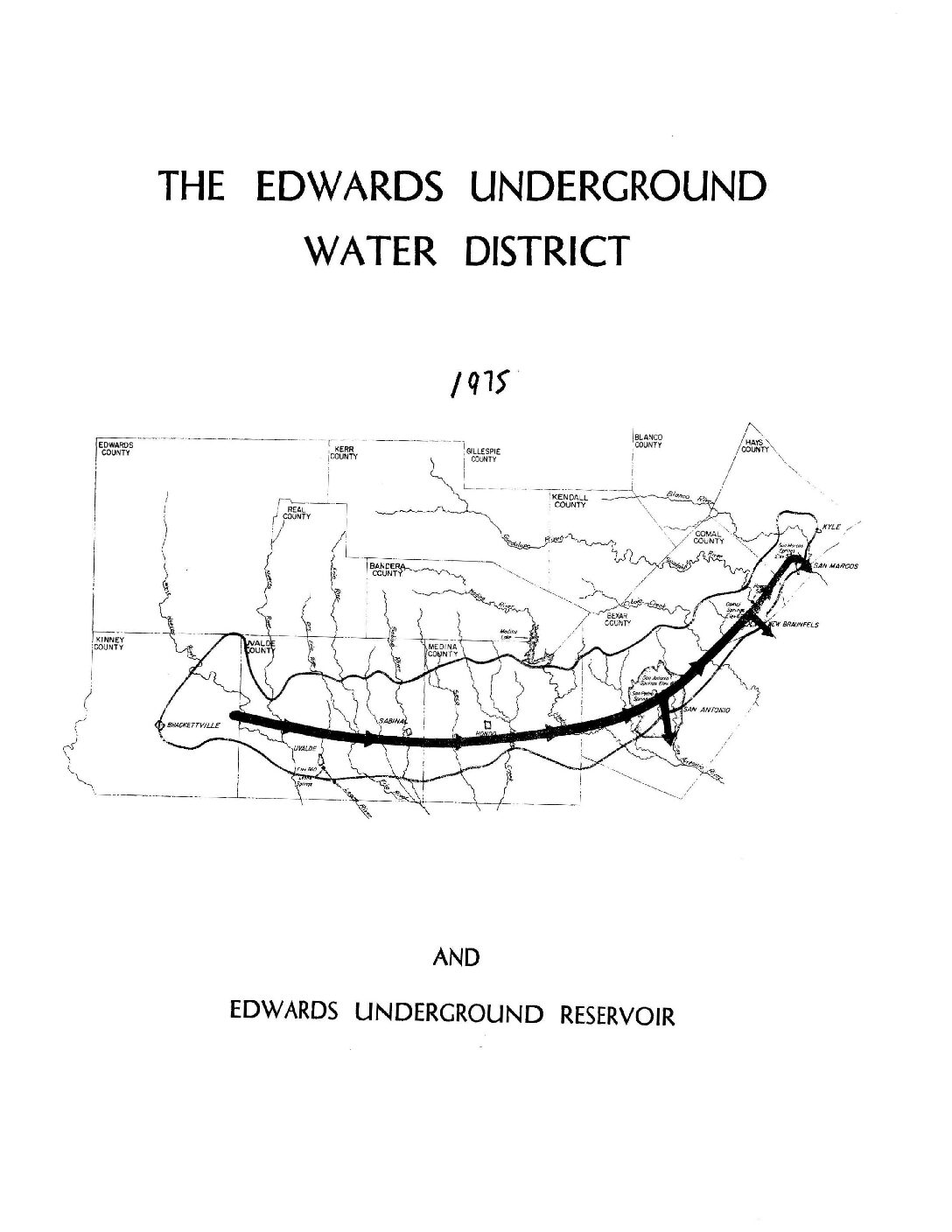
Description: General description of the Edwards Aquifer and current concerns and acts of regulatory agencies in 1975. This document is included for its historical value and information may no longer be current.
Location: Edwards Underground Water District Jurisdiction
Summary:General description of the Edwards Aquifer and current concerns and acts of regulatory agencies in 1975. This document is included for its historical value and information may no longer be current.
Appendix C of Edwards Aquifer Authority Hydrologic Data Report for 2013
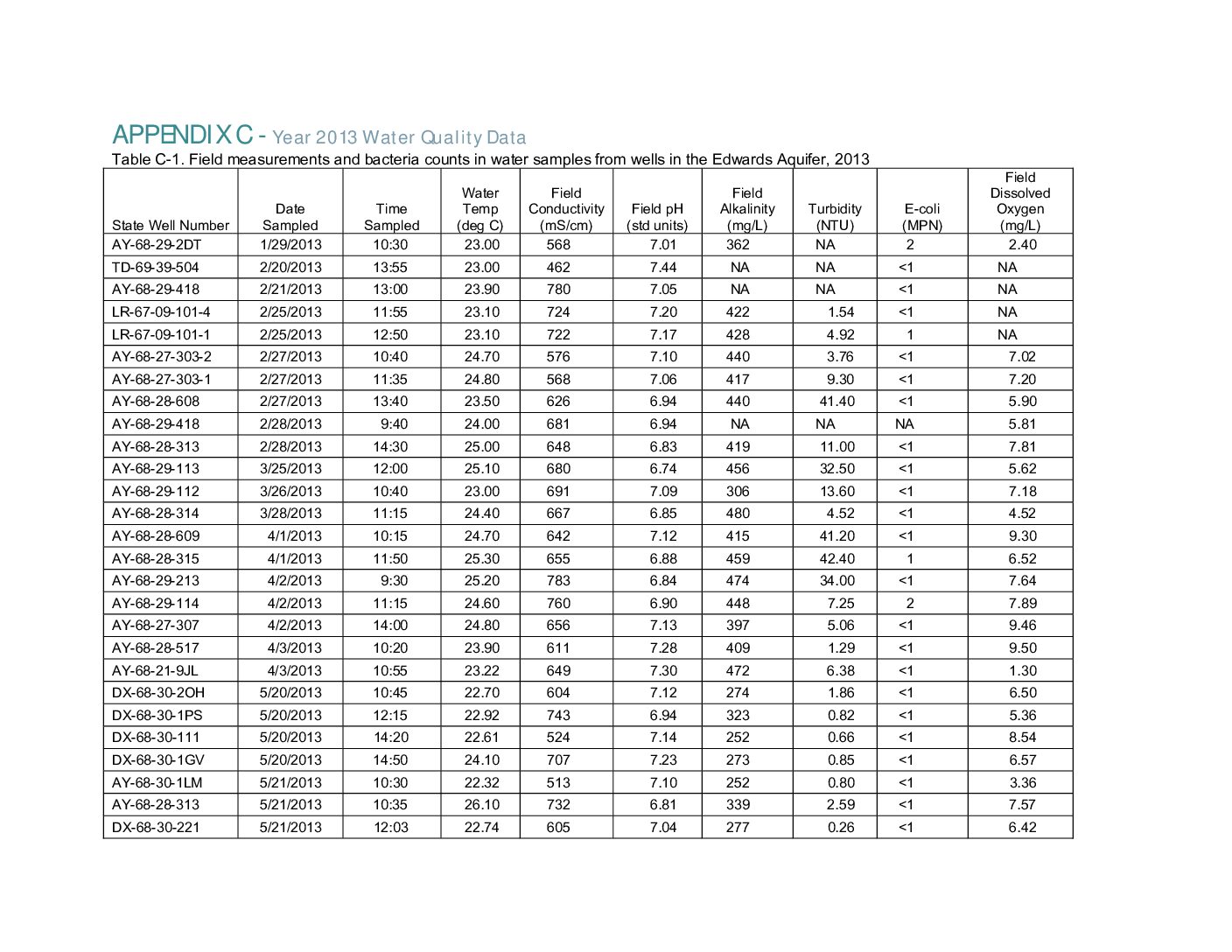
Description: Appendix C of annual report for 2013 on recharge, discharge, water levels and water quality in the Edwards Aquifer San Antonio Region
Report Number: Appendix C
Location: Edwards Aquifer-San Antonio Region
Summary:This report presents results of the Edwards Aquifer Authority's (EAA's) Edwards Aquifer Data Collection Program for calendar year 2013. The report also provides a summary of events that were considered significant and that may have affected the Edwards Aquifer during the year. During 2013, the EAA collected a wide variety of Edwards Aquifer related data, including: Groundwater level data; Precipatation measurement data; Groundwater recharge data; Groundwater discharge and usage data; and Water quality data from groundwater, surface water, and springs
Edwards Aquifer Authority Hydrologic Data Report for 2013
Description: Annual report for 2013 on recharge, discharge, water levels and water quality in the Edwards Aquifer San Antonio Region
Report Number: 14-02
Location: Edwards Aquifer-San Antonio Region
Summary:This report presents results of the Edwards Aquifer Authority's (EAA's) Edwards Aquifer Data Collection Program for calendar year 2013. The report also provides a summary of events that were considered significant and that may have affected the Edwards Aquifer during the year. During 2013, the EAA collected a wide variety of Edwards Aquifer related data, including: Groundwater level data; Precipatation measurement data; Groundwater recharge data; Groundwater discharge and usage data; and Water quality data from groundwater, surface water, and springs


 CURRENT